 Object Biography
Modified Special Forces DCU Top & Wrist Coach Group
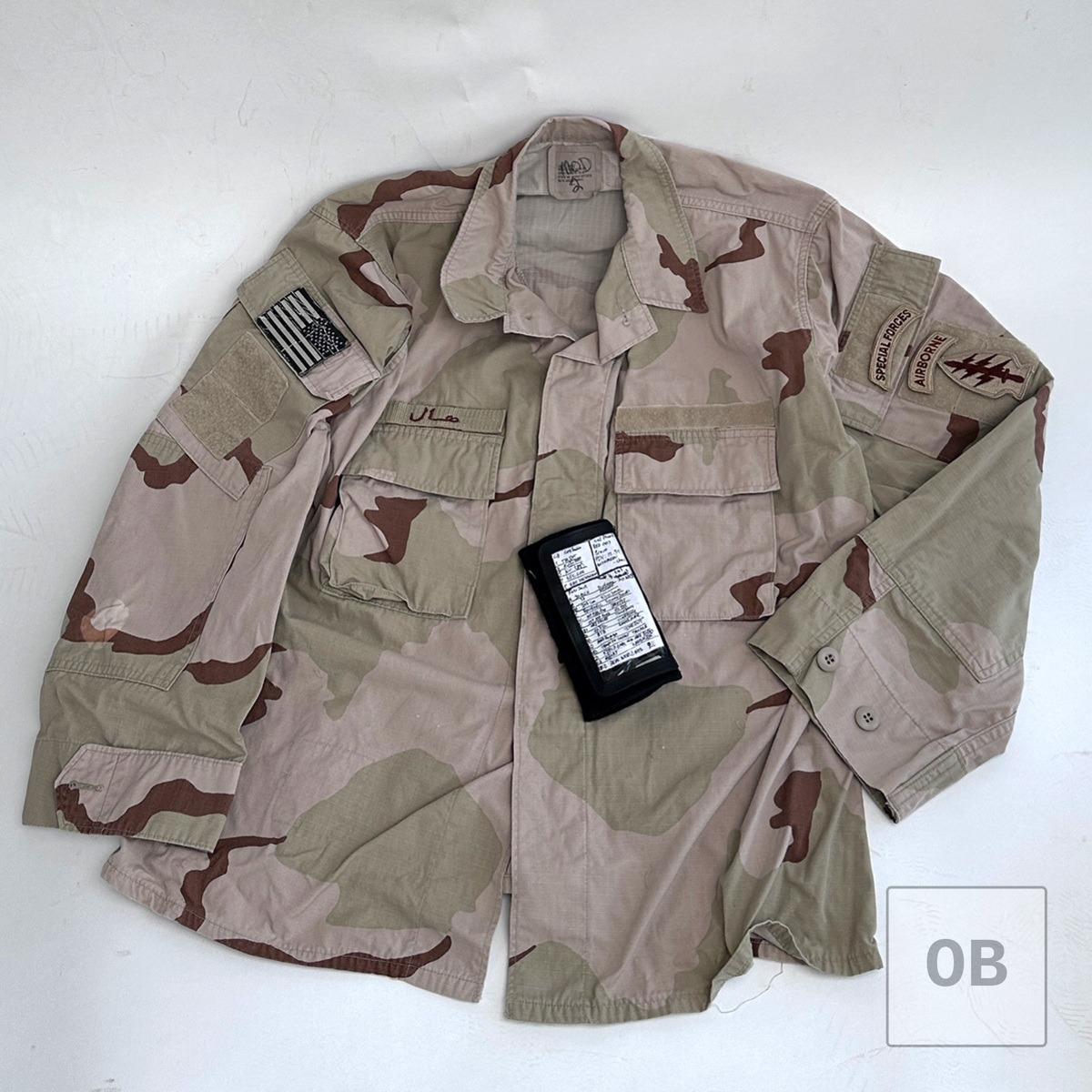
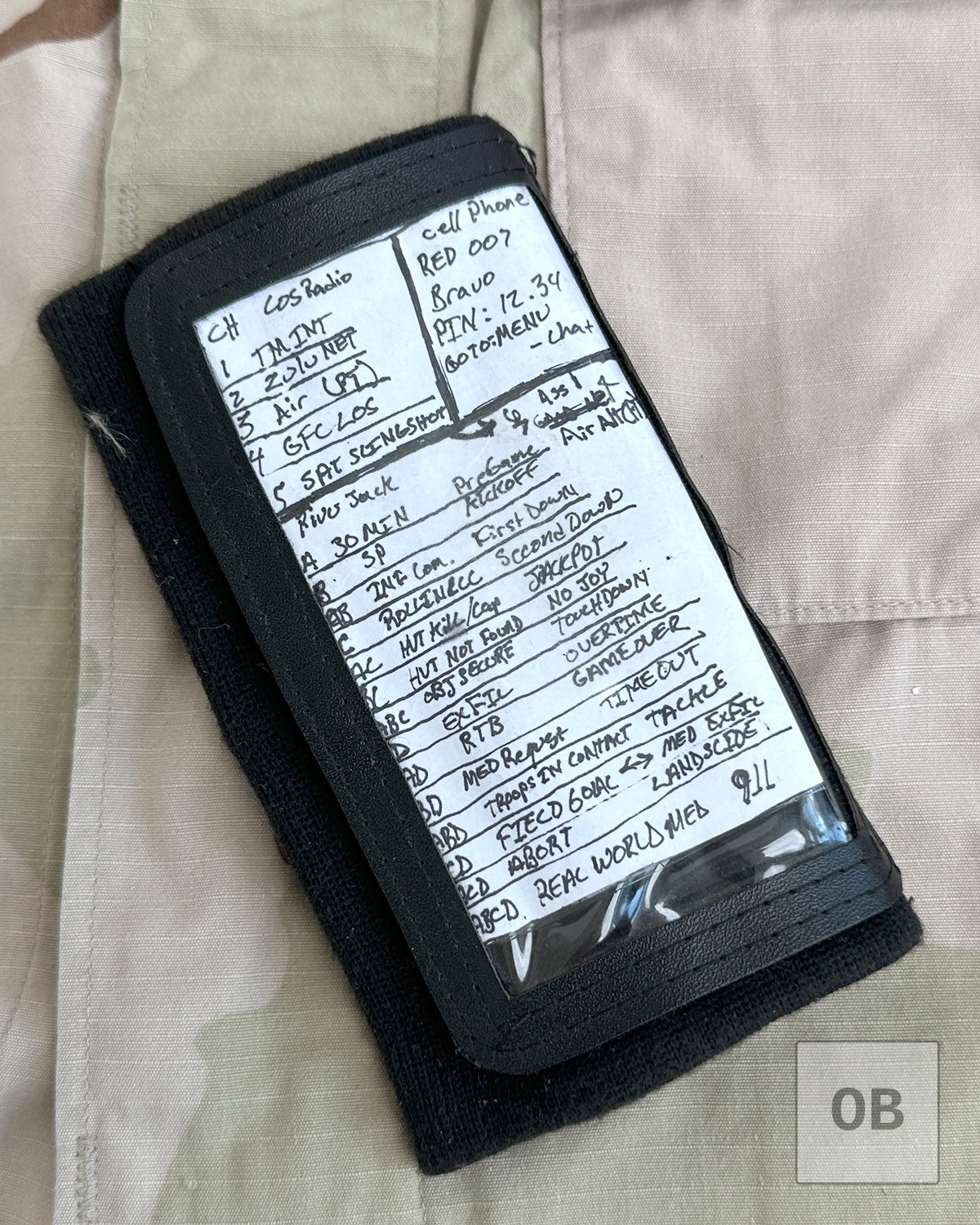
A modified top and theater-made insignia made the listing worth a second look. What made it worth buying was what showed through the wrist coach's clear vinyl window: mission notes handwritten by its wearer.
Made of black elastic knit, clear vinyl, and a strip of hook-and-loop fastener, the wrist coach is virtually indistinguishable from those sold in sporting goods stores for quarterbacks to hold plays.
What did the notes contain? Who wrote them? What op had they been used on? The listing answered the first question. The rest remained unknown.
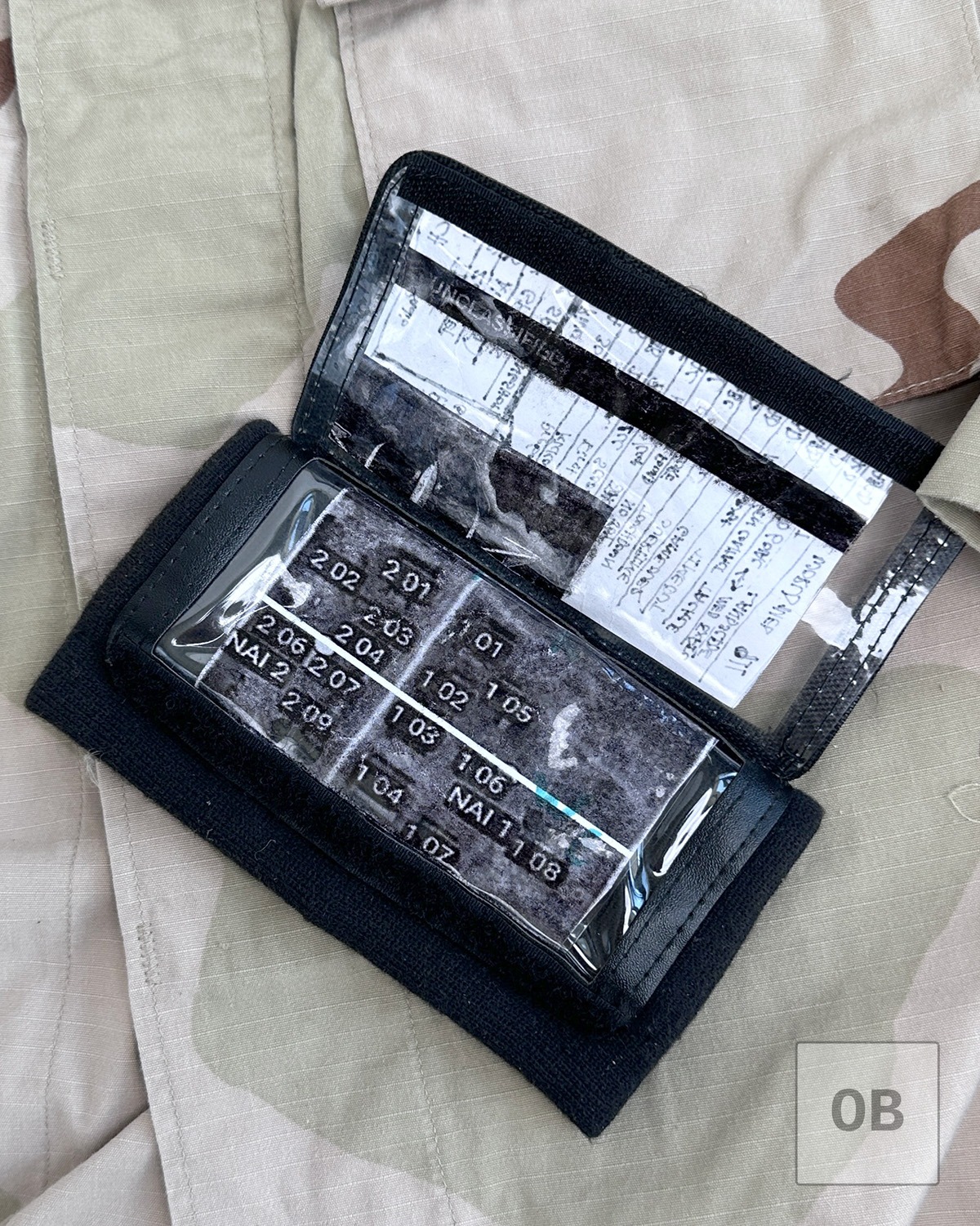
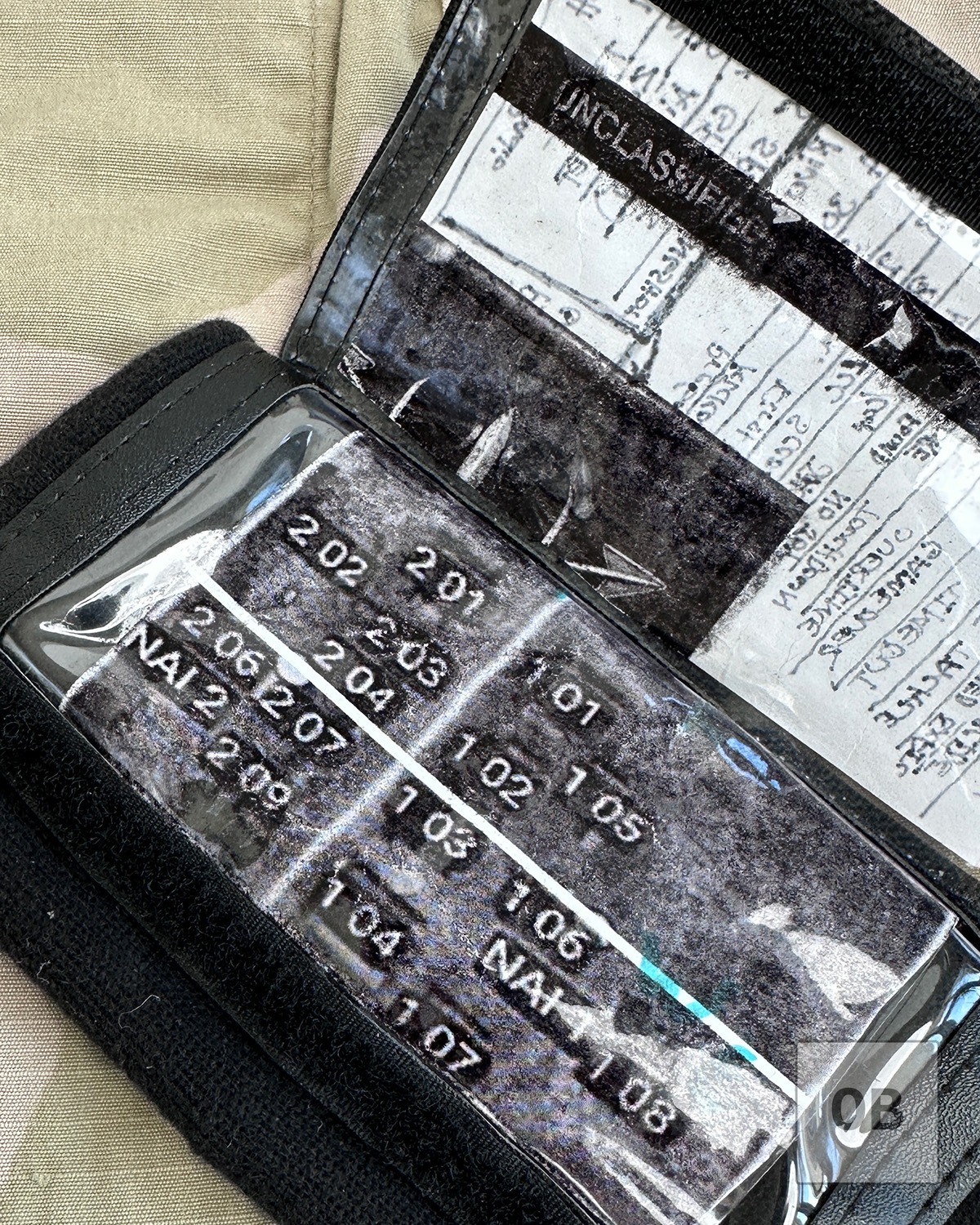
The folded sheets, once removed for closer examination, had been written on ordinary printer paper, roughly cut to fit. One sheet had been written on the reverse of an earlier document bearing part of a printed 7th Special Forces Group beret flash, the Distinctive Unit Insignia, and a black banner reading "UNCLASSIFIED" — a small detail suggesting the paper had been repurposed rather than discarded.
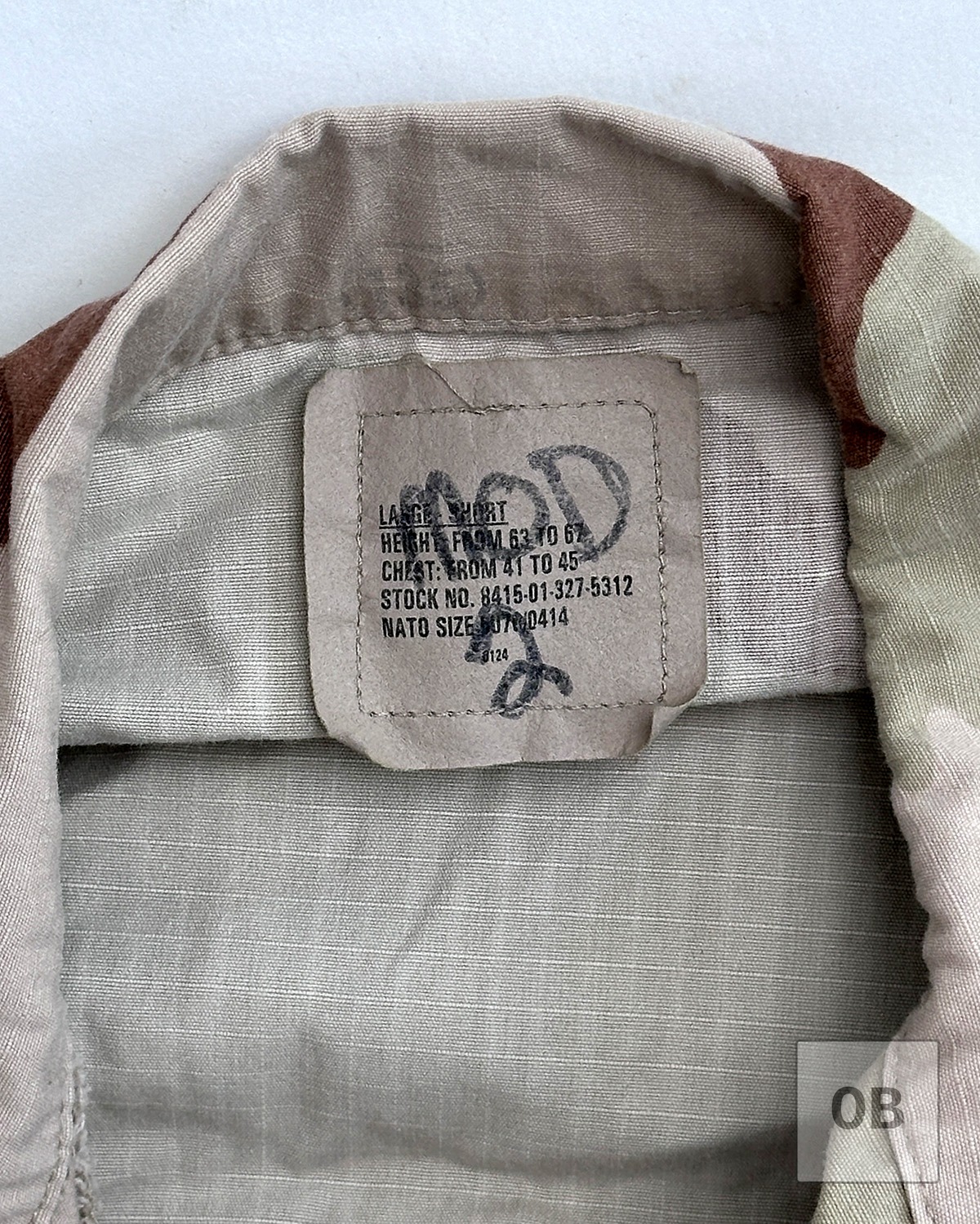
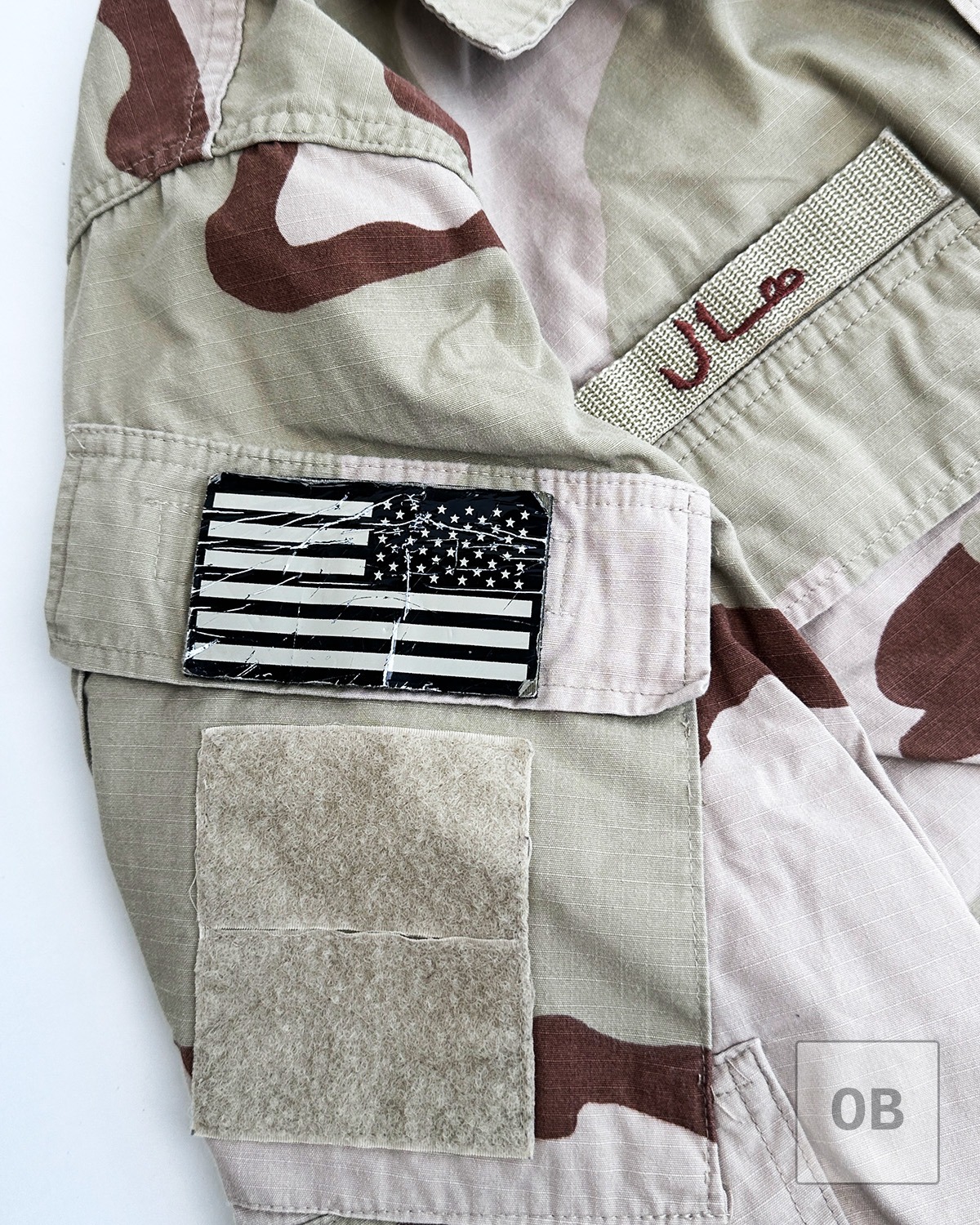
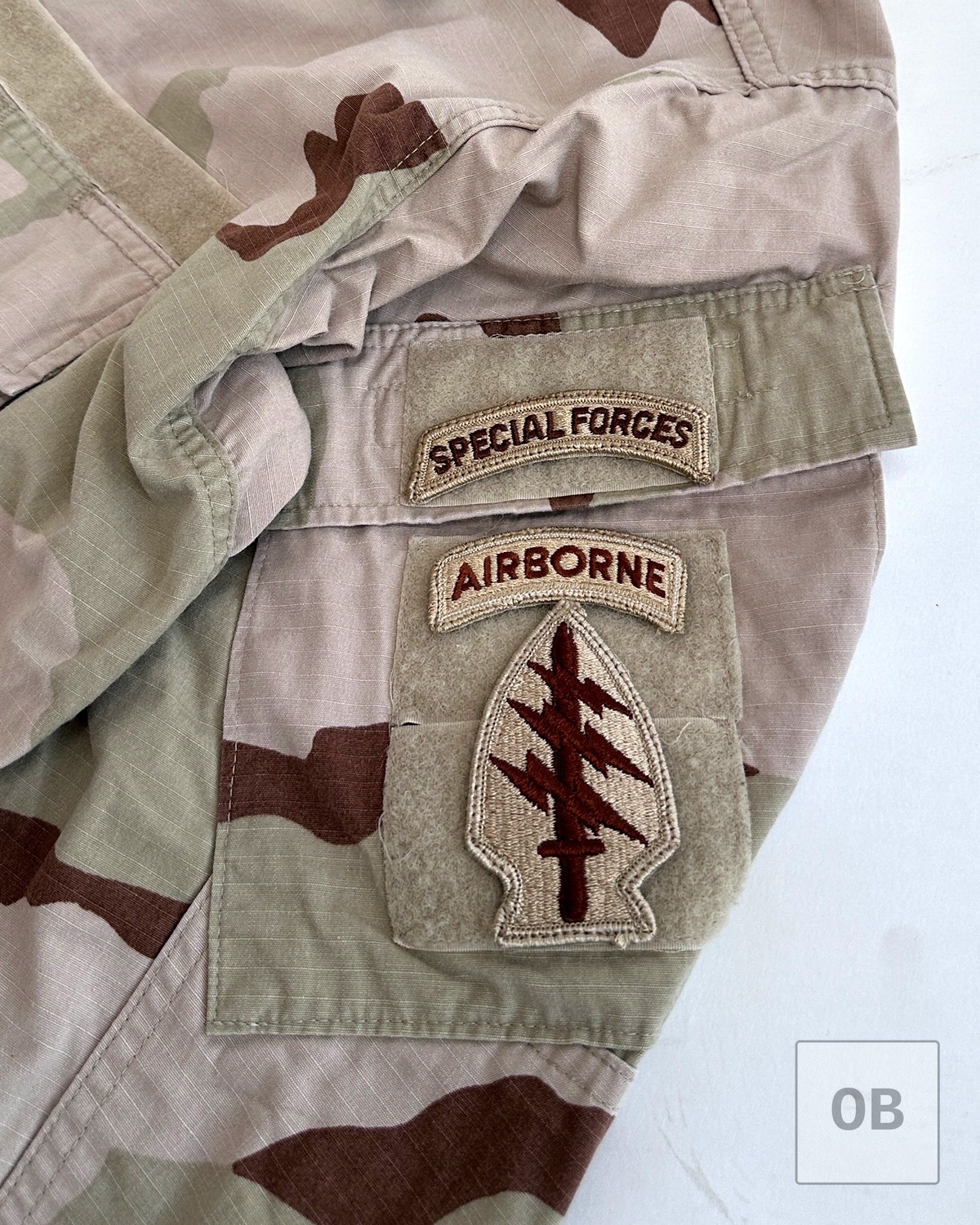
The wrist coach accompanied a modified three-color Desert Camouflage Uniform (DCU) top, manufactured under a 1999 contract. Like many Special Forces uniforms of the Global War on Terror, it had been altered for operational use: the lower front pockets relocated to the sleeves, loop fields added for a removable infrared flag, name tape, branch tape, and unit insignia. Inside, a handwritten "MOD 2" appears in black marker on the size tag.
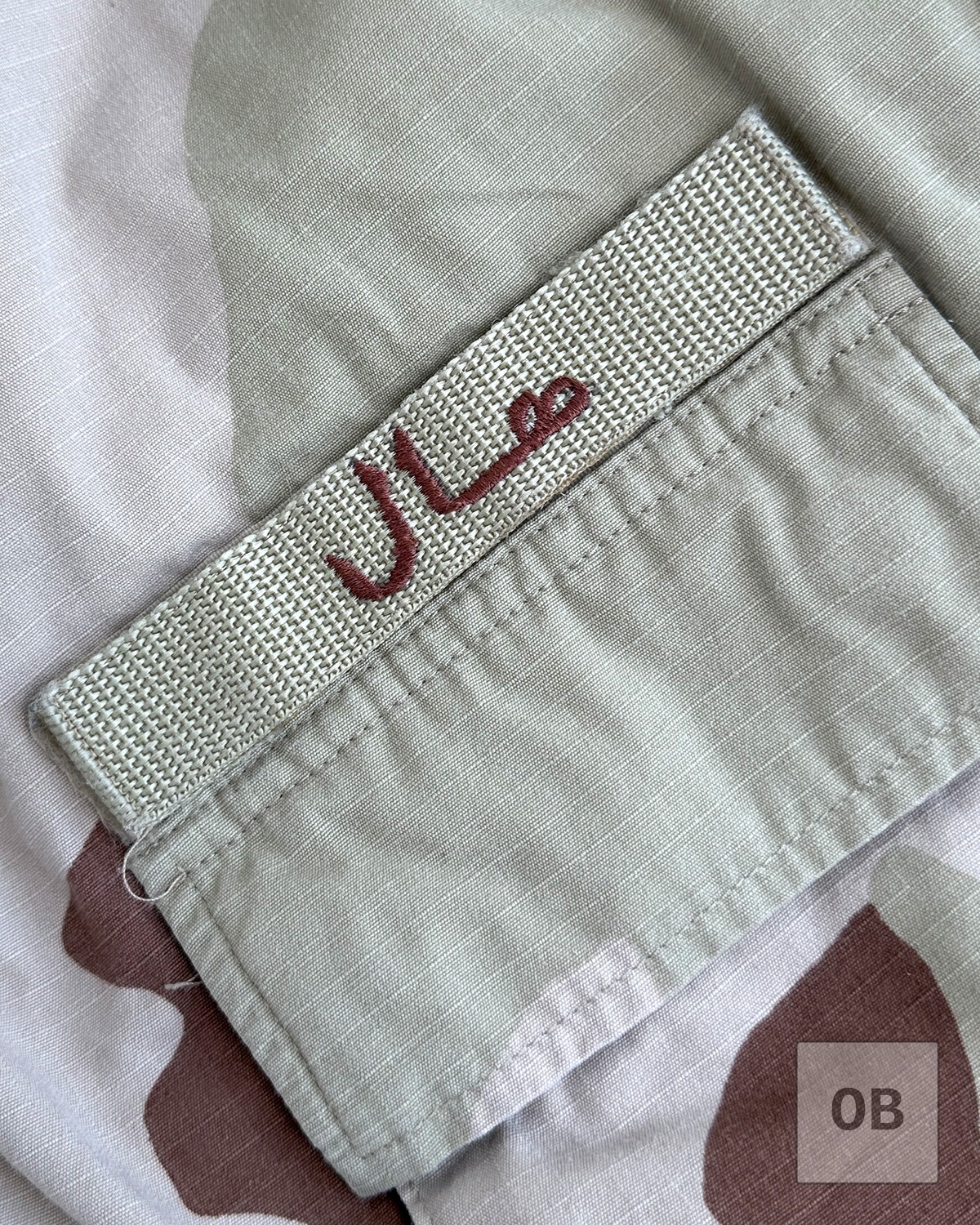
Above the left breast pocket sits a Farsi name tape, embroidered in cinnamon thread on tan nylon webbing. Translations across multiple AI models mostly rendered the surname as "Hall," with a minority reading "Haal" — a variation that appears to reflect transliteration rather than disagreement over the underlying Persian text.
According to the seller, the top and wrist coach were found together, patches still attached, at a military surplus store in Fort Walton Beach, Florida — a shop that sits just west of Eglin Air Force Base, offering a plausible path by which equipment associated with 7th Special Forces Group could have entered the civilian surplus market.
The notes inside the coach held radio channel assignments, callsigns, football terminology, and a map marked with a numbered target reference grid — recognizable in outline, though many of the abbreviations and codewords required further research.
One detail stood out. Kickoff. First down. Touchdown. Game over. Not arbitrary words, but predetermined events understood by everyone on the net. To anyone without the reference sheet, the traffic might have sounded like a football game. To the team, every word carried precise operational meaning.
The wrist coach itself is ordinary. The handwritten notes are not — a working communications plan prepared for a combat deployment, something meant to be used, updated, and eventually discarded. Instead, by chance, it survived with the uniform that carried it.
A complete transcription and interpretation of the notes is reproduced below, so they may be preserved alongside the object itself.
Transcription & Interpretation
Decoded radio plan, brevity codes, and target reference grid.
This is a standard SOF (Special Operations Forces) wrist coach — an arm-worn reference card carried during direct-action missions. It contains the team's comms plan on one side, a list of brevity codes disguised as football play-calls in the middle, and a target reference grid on the back. The football overlay is an OPSEC measure: a third party intercepting the radio traffic hears what sounds like a sports broadcast, not a raid in progress.
Card 1 — Communications Plan
Radio channel assignments for the team's multiband radios. Each preset channel maps to a specific net for a specific audience.
| Ch | Net | Meaning |
|---|---|---|
| 1 | TM INT | Team Internal |
| 2 | ZULU NET | Higher / command net |
| 3 | AIR (PT) | Air Primary (aircraft / CAS) |
| 4 | GFC LOS | Ground Force Commander, line-of-sight |
| 5 | SAT SLINGSHOT | Tactical SATCOM (Slingshot) |
| 6 | ASS NET | Assault Net |
Cell phone / secure handset notes — the upper-right corner of the card lists handset login information for a secure satellite phone or chat device, likely Iridium-based: callsign RED 007, net Bravo, PIN 12.39, navigation GOTO → MENU → Chat.
Card 2 — Brevity Codes (Football Overlay)
These codewords are sent in place of the actual event. "Jackpot" (HVT secured) and "No Joy" (target not present) are real DoD-wide brevity terms; the rest are unit-specific play-calls. Letter prefixes on the original card (A/B/C/D) indicate which team element should respond to the call.
| Event (real meaning) | Codeword sent over radio |
|---|---|
| 30 minutes from SP (start point) | Pre-Game |
| Infil complete | Kickoff |
| Force consolidated / linked up | First Down |
| Rolling on objective | Second Down |
| HVT killed or captured | Jackpot |
| HVT not found / not present | No Joy |
| Objective secure | Touchdown |
| Exfil | Overtime |
| RTB (return to base) | Game Over |
| MEDEVAC request | Timeout |
| Troops in contact (TIC) | Tackle |
| Field goal ↔ medical exfil (linked call) | Field Goal / Med Exfil |
| Mission abort | Landslide |
| Real-world medical emergency | 911 |
| Air alert / air strike inbound | Air Alert |
Card 3 — Target Reference Grid
A laminated graph-paper map divided into four quadrants by a white cross. Each cell is a numbered Target Reference Point (TRP) or checkpoint. Instead of transmitting a 10-digit MGRS grid coordinate over the radio — slow, and a risk to the team's location — an operator could simply call "moving to 106" or "contact vicinity NAI 1."
The 200 series covers the north half of the area of operations (201–209); the 100 series covers the south half (101–108). NAI 1 and NAI 2 are Named Areas of Interest — intel-collection focus zones the team was watching for enemy activity. Teal tick marks likely mark route waypoints or phase-line boundaries the team was to cross.
Summary: a complete direct-action mission reference — who to talk to on which channel, what to say when something happens, and where to say it's happening — all small enough to fit on the back of a wrist.
Author's Note
If you recognize this top or wrist coach as your own, or know the Special Forces soldier who carried it, I would welcome the opportunity to learn more about its history. My goal is to preserve the stories that accompany these objects. Personal information is never published without permission, and any details shared privately will remain with the object unless you request otherwise.