 Object Biography
DEVGRU (Naval Special Warfare Development Group) DCU Top
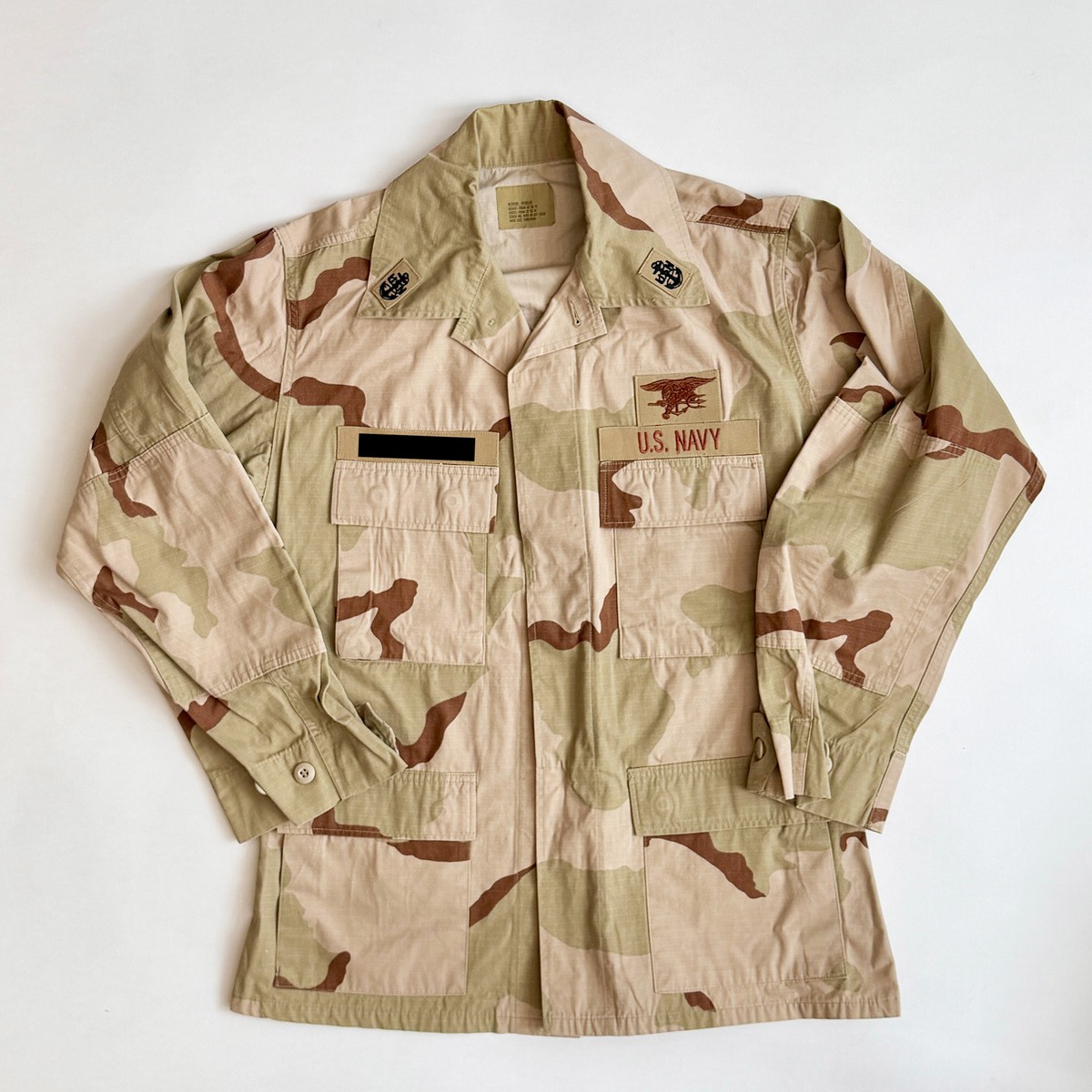
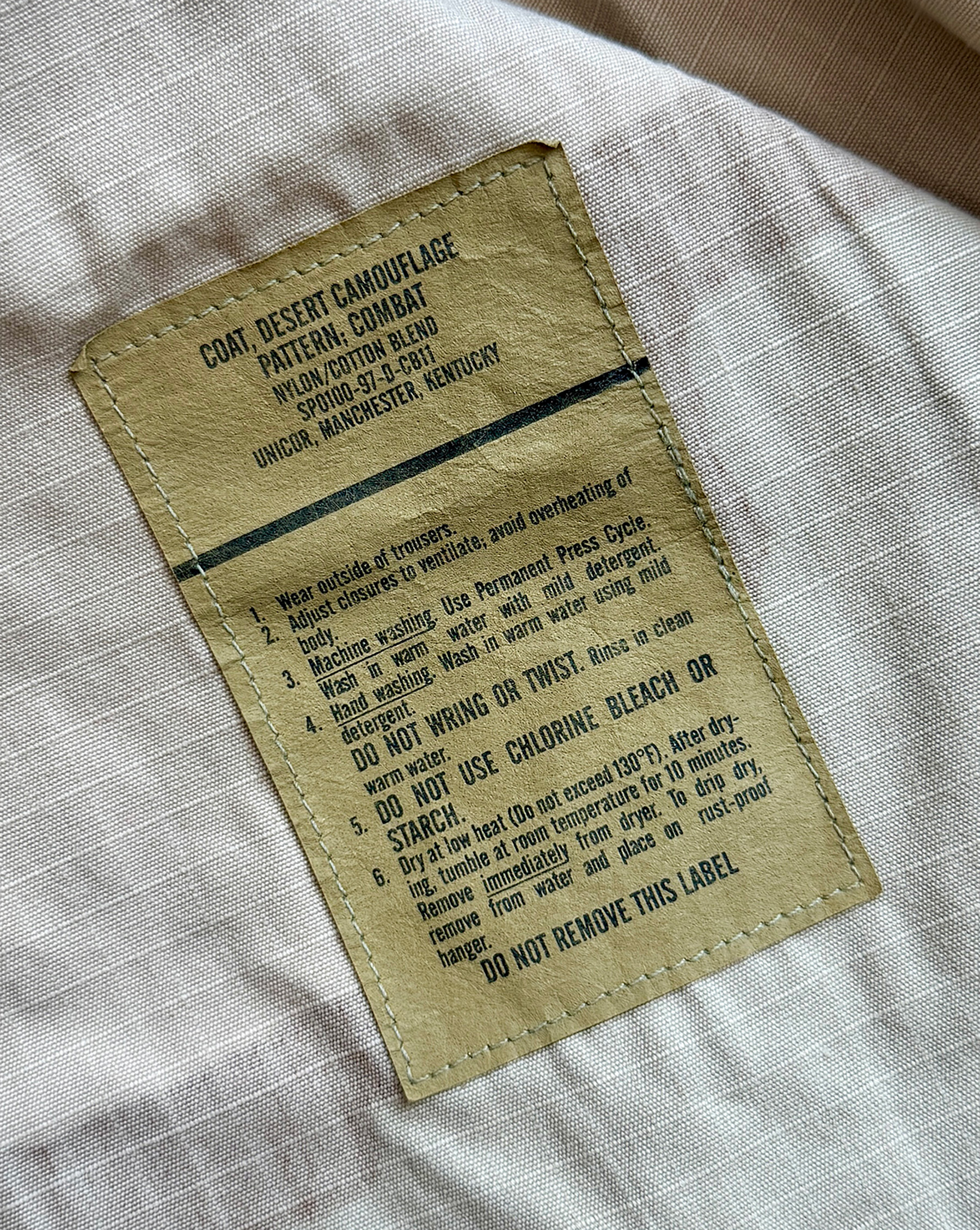
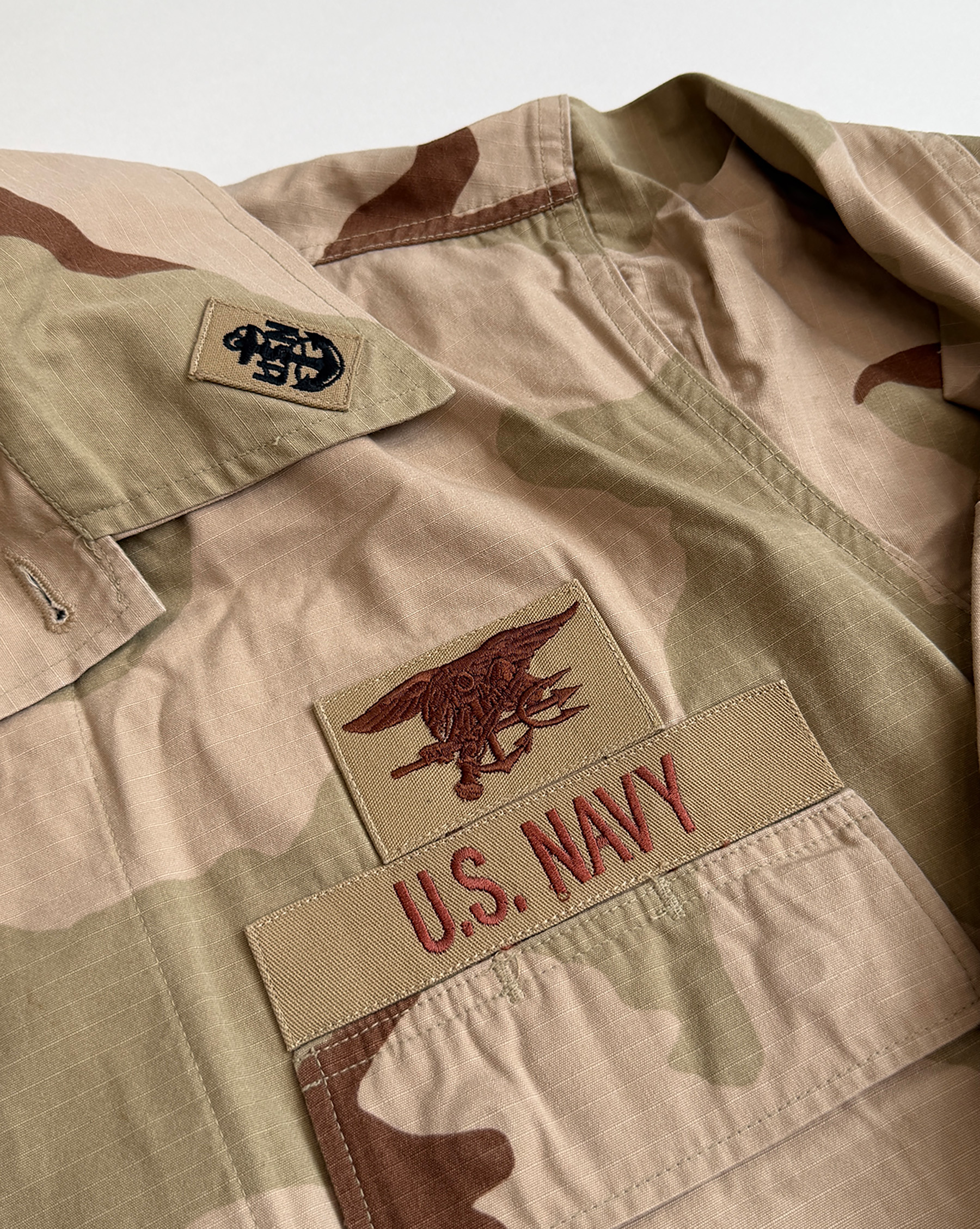
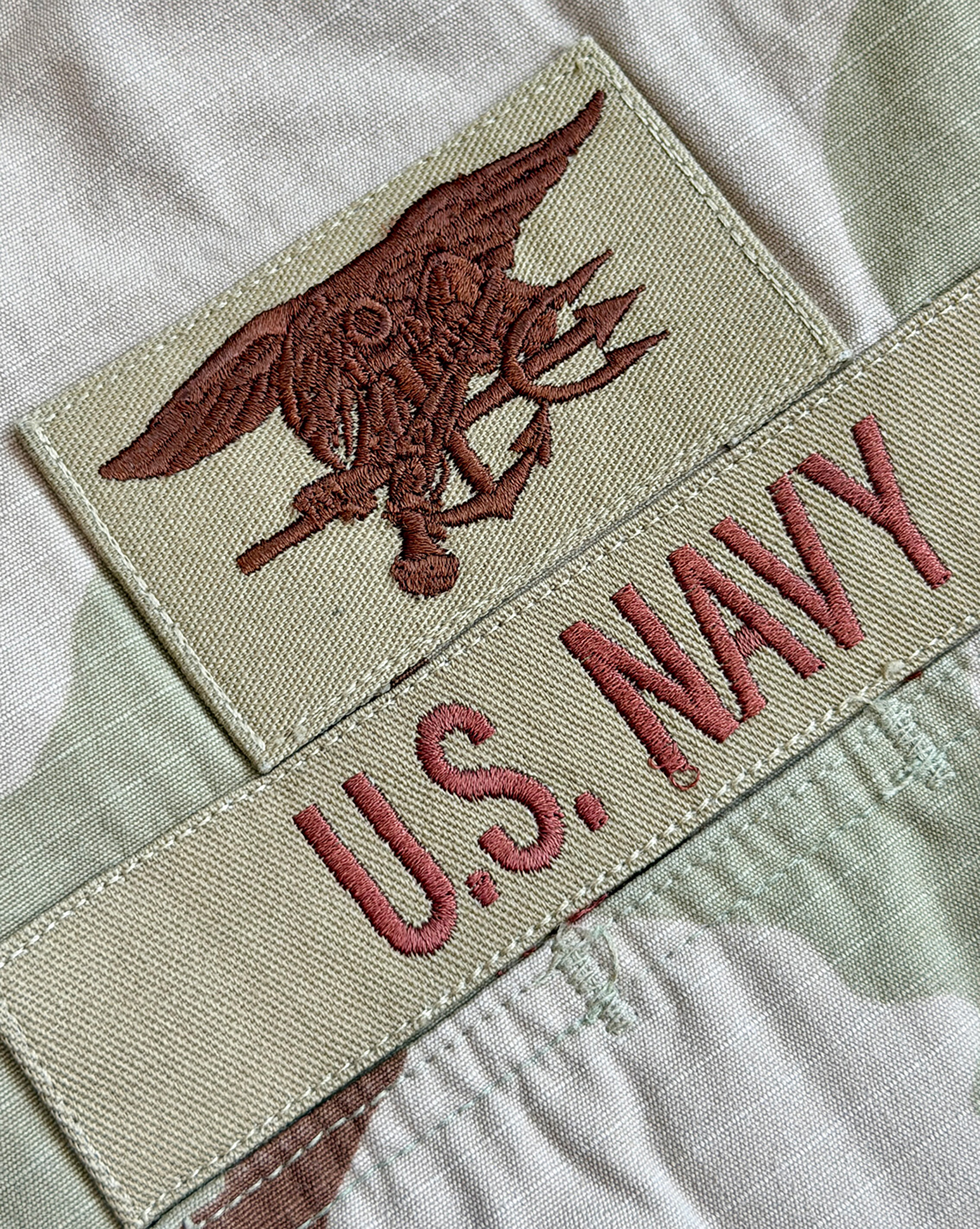
This six-color Desert Camouflage Uniform top carries a 1997 contract date on its interior size tag. It surfaced in the Virginia Beach area and is attributed to a DEVGRU (Naval Special Warfare Development Group) operator. It did not come directly from him. In reaching out via email, he didn't rule it out.
He entered the Navy in 1987 with a single goal: to become a SEAL. He graduated BUD/S in 1988 and reported to SEAL Team Two in Virginia Beach, deploying three times, including in support of Operations DESERT SHIELD and DESERT STORM. In 1993 he was selected for DEVGRU — the unit that grew out of the original SEAL Team Six — and spent nearly nineteen of his twenty-five years there, deploying dozens of times to Haiti, Bosnia, Somalia, Yemen, Afghanistan, and Iraq, and rising eventually to lead within Red Squadron, the unit's assault element.
From September 2009 to September 2011, he served as DEVGRU's Command Master Chief, one of only a small handful of SEALs to hold that post. It was during that tenure that Red Squadron carried out the raid that killed Osama bin Laden. In the planning, he pushed back hard on Admiral William McRaven's plan to fly the team in on untested stealth helicopters, arguing for a parallel contingency — an objection McRaven found disrespectful enough that he pressured Team Six's commanding officer to relieve him of duty, a request the CO refused. Overruled, he spent the following weeks running downed-helicopter drills against mock compounds built in North Carolina, Nevada, and Afghanistan. On May 1, 2011, one of the real helicopters did go down on landing — and the team, drilled for exactly that outcome, went to work without missing a beat. The mission was over in thirty-eight minutes.
He retired with a Silver Star, six Bronze Stars with valor devices, and a long list of other decorations, then earned a master's degree jointly offered by Oxford and HEC Paris, began a PhD in complex adaptive systems science, and founded a leadership consultancy built on the same principles he'd practiced in the squadron. He has since been profiled by Forbes as the man who trained the SEAL Team Six unit that killed bin Laden, and featured in the bestselling book The Culture Code.
None of that was yet true in 1997. The chief petty officer who may have worn this top was four years into DEVGRU and fifteen years from Abbottabad — long before Oxford, long before his name appeared in a business magazine instead of a deployment order.