 Object Biography
WWII Ranger Assault Vest
Description
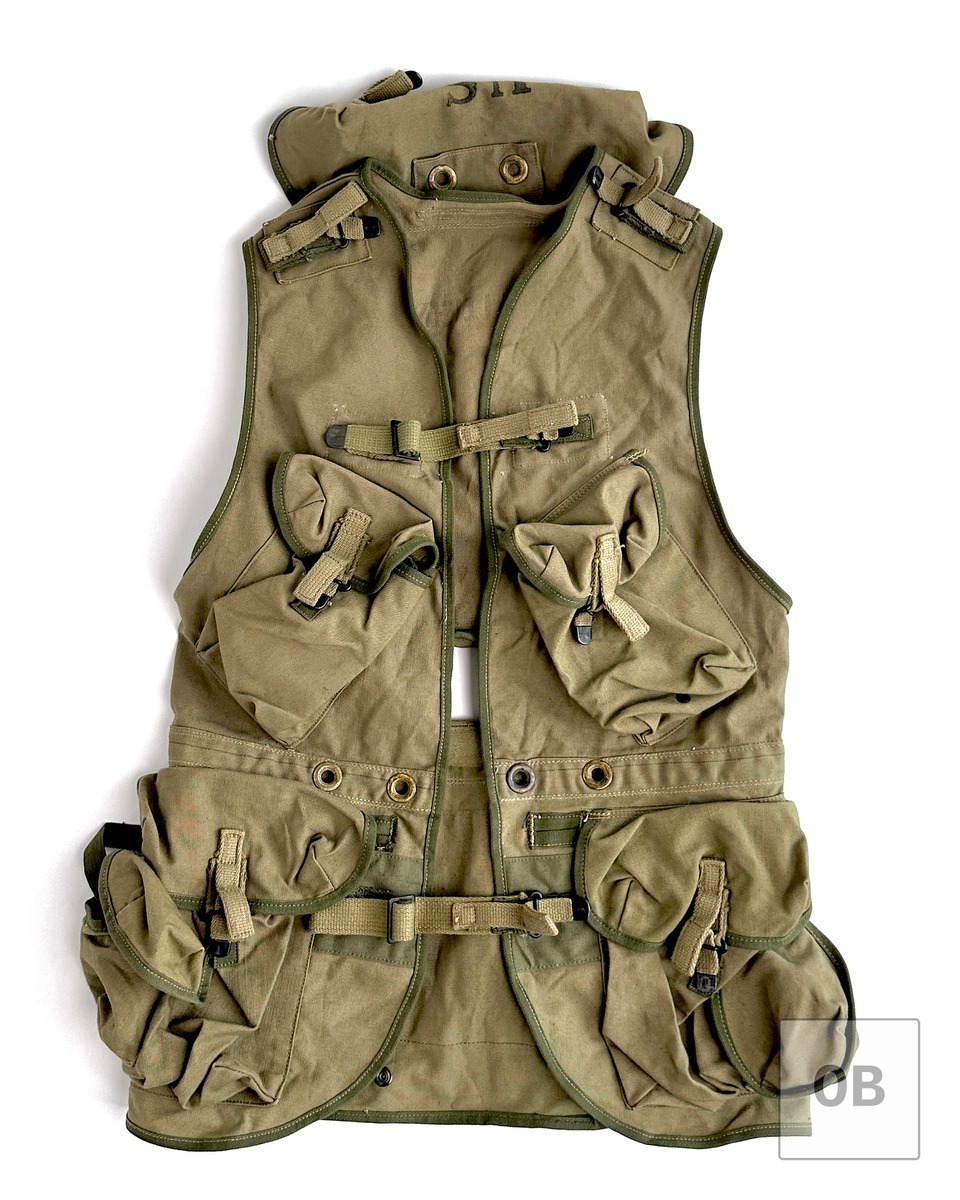
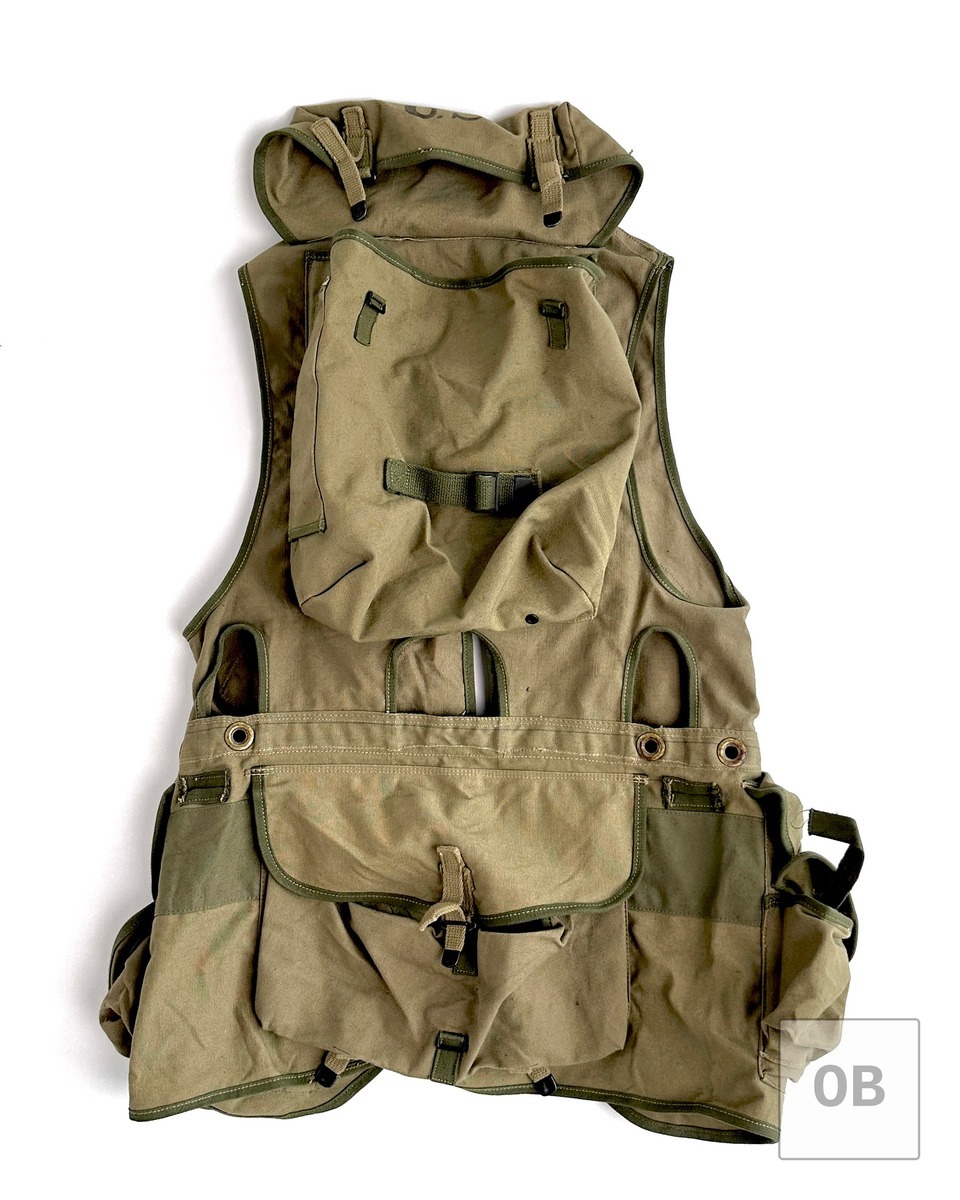
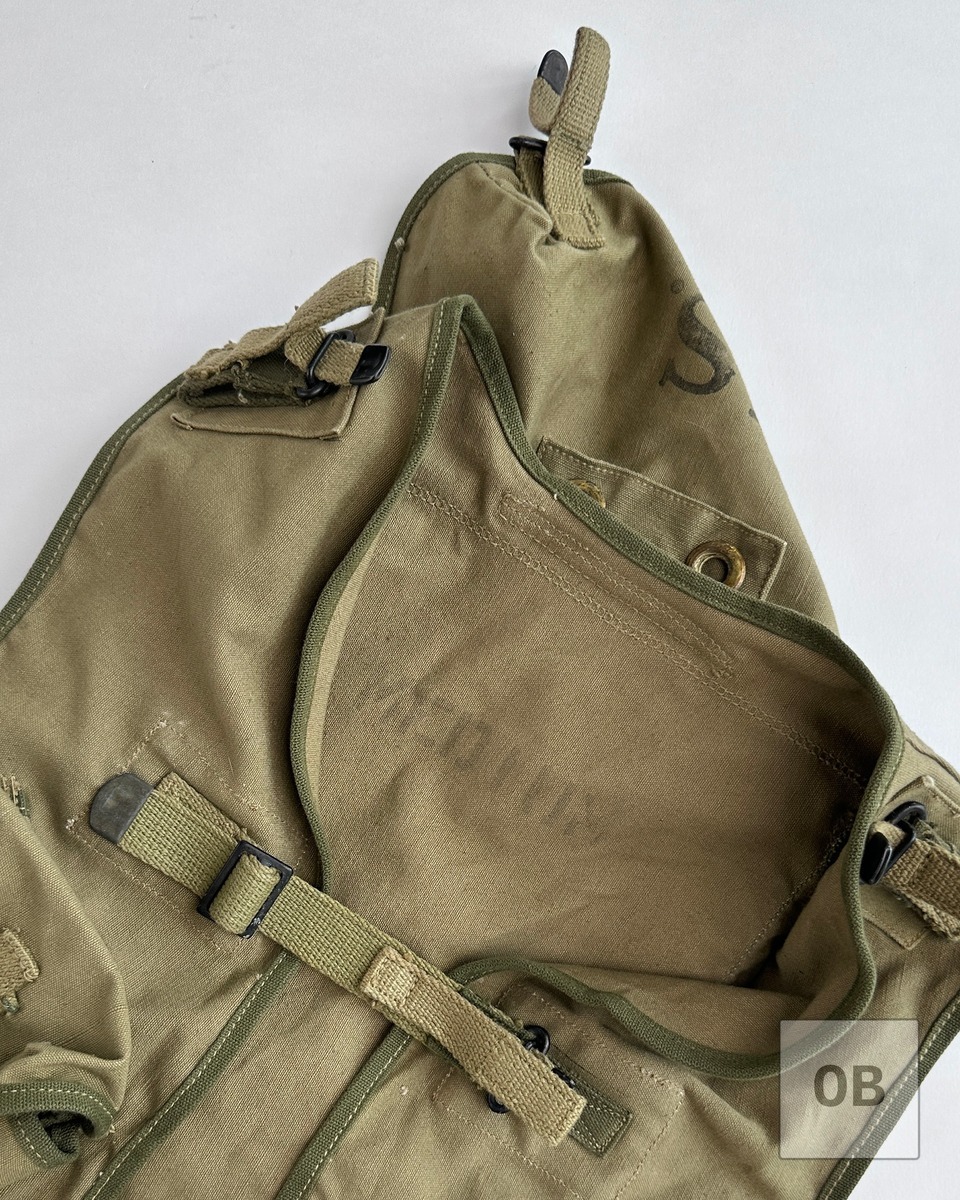
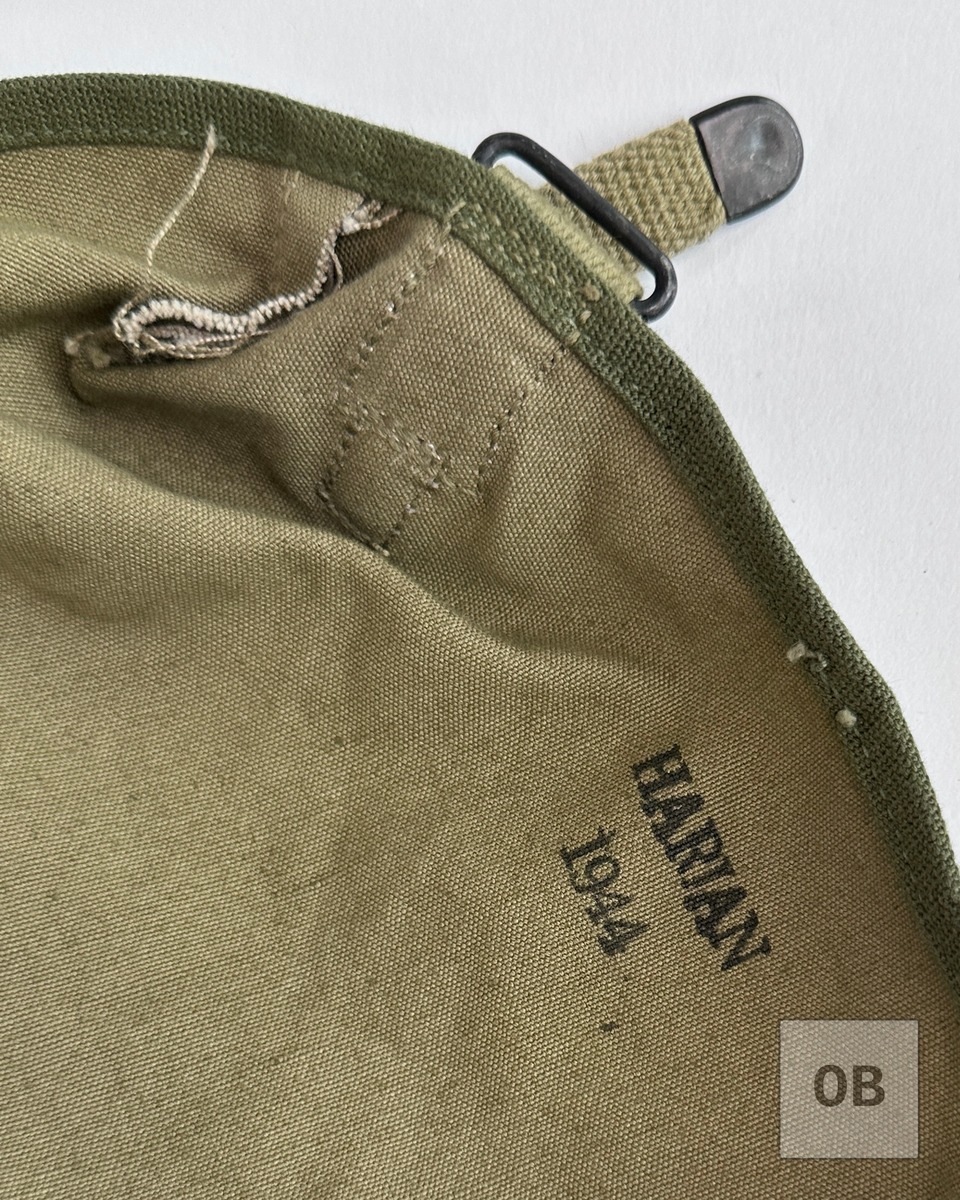
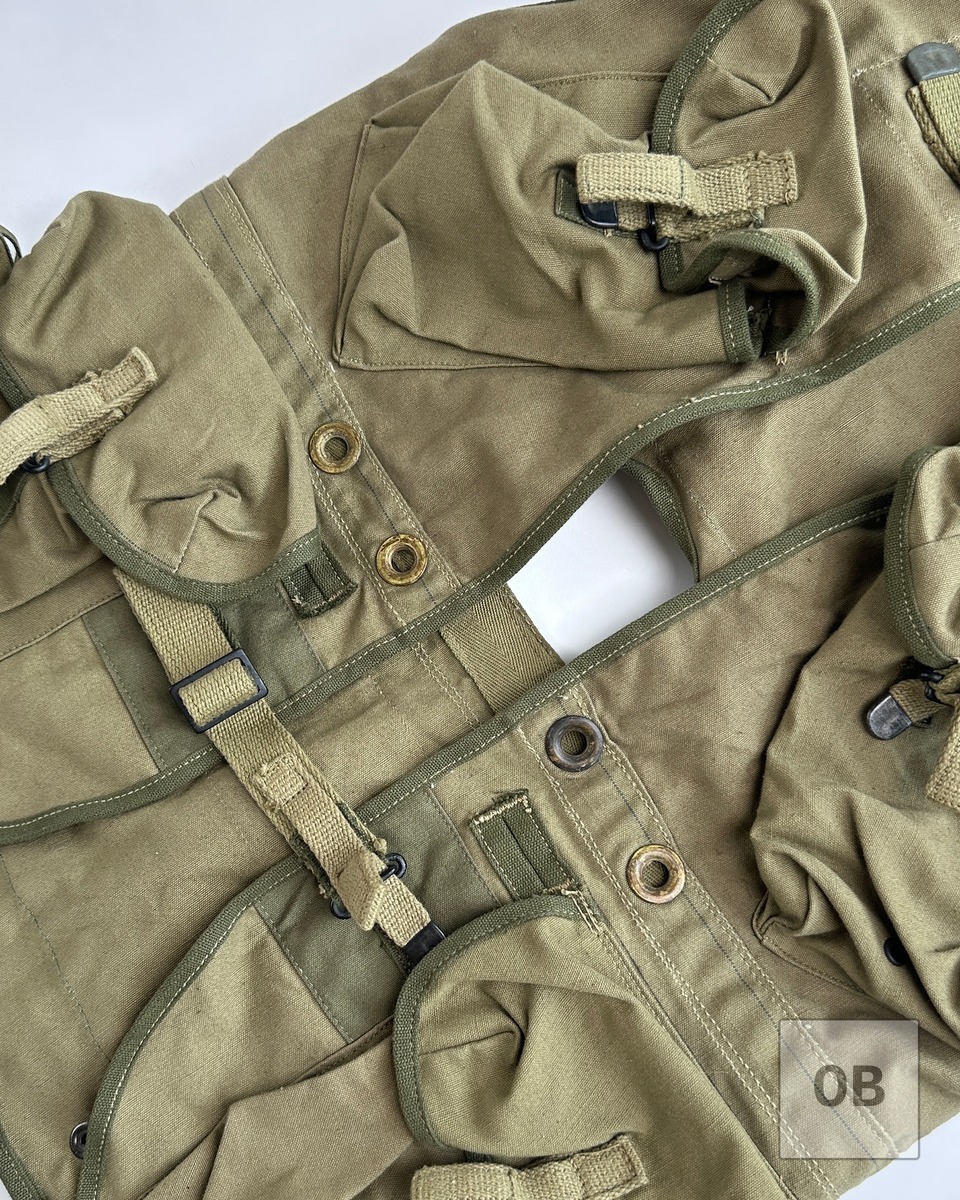
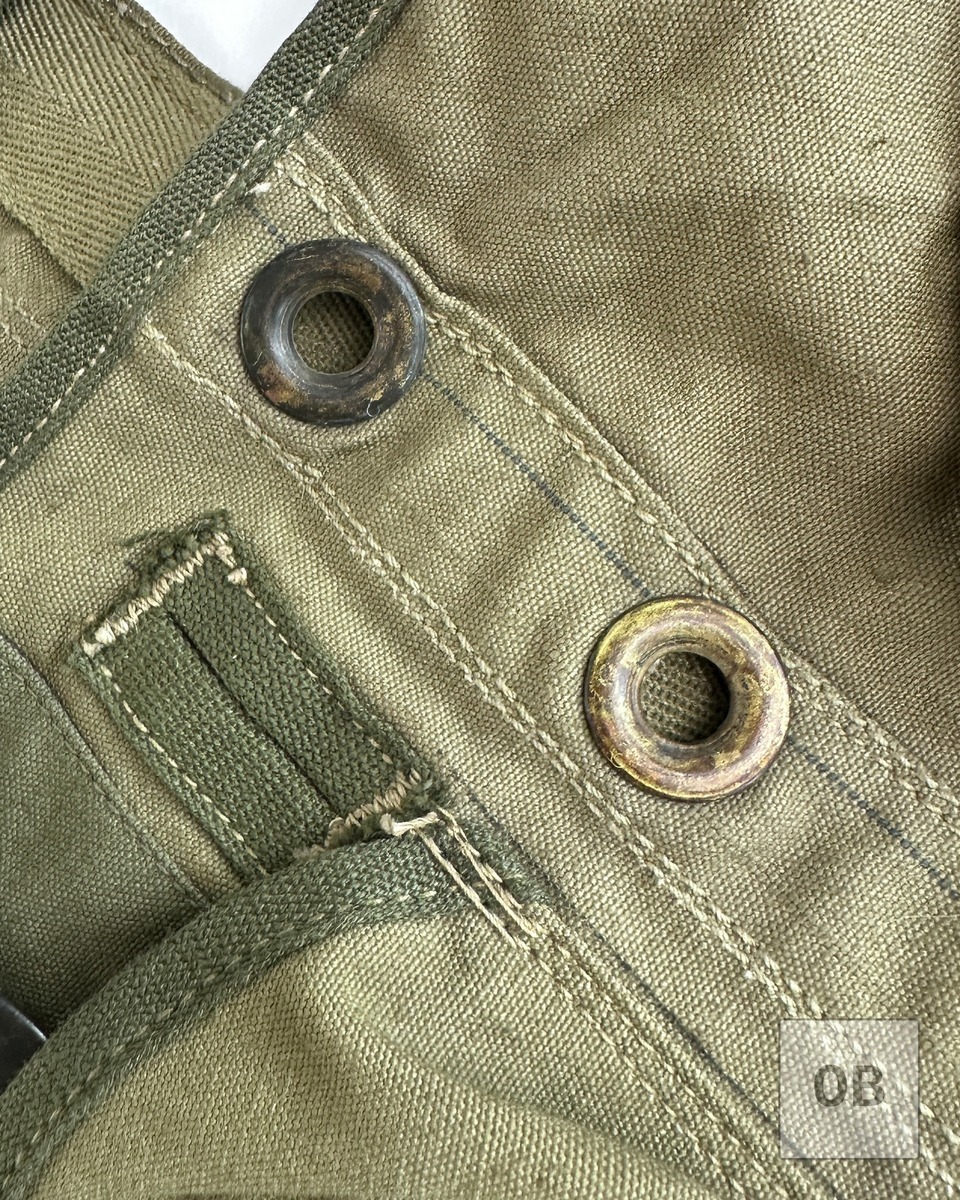
A U.S. Army assault vest, size Medium, manufactured by the Harian Stitching Company and dated 1944. It is heavy field-green (OD No. 3, "khaki") cotton canvas with OD No. 7 trim and waist banding, and tracer yarn woven through several panels (a mill practice common through the mid-20th century before fading out of use). "MEDIUM" is faintly stenciled inside the body, and "HARIAN 1944" is stamped boldly beneath the rear pack flap. The only wear is light, unevenly lacquered oxidation on the brass waist grommets; otherwise the vest presents as unissued.
Origin and Manufacture
This vest belongs to a small family of assault vests rushed into production in early 1944 for the Normandy invasion, developed after the Army evaluated British Commando-style vests in late 1943. Contractors included J.A. Shoe, Tweedie, and Harian, working in OD No. 3 and OD No. 7 canvas. Estimates put total production at around 14,000 but I was not able to confirm this number.
Use and Service Record
The vest let an assault soldier carry ammunition, grenades, demolition charges, and rations directly on the body, and was issued in May 1944 to select units slated for the Normandy first waves: the 1st, 4th, and 29th Infantry Divisions and the 2nd Ranger Battalion. It proved hot, heavy, and cumbersome in the field, and most were discarded within weeks of the landings, which is why originals are now rare and highly prized D-Day collectibles.
Condition and Provenance
This example shows none of that hard use, its unissued condition, faint stencil, and light grommet oxidation suggest a reserve or depot piece that never saw combat. Its known chain of custody starts with a Colorado shoe cobbler who advertised buying military relics; a customer sold it to him, it later passed to a friend of mine, and I purchased it from that friend around 2005. Earlier history is unknown.
Significance
As a dated, contractor-marked, apparently unissued example, this vest captures both the rushed effort to equip troops for Normandy and how little of that equipment survived the invasion itself.