 Object Biography
Raven FAC Flight Jacket — Jim "Butch" Hix, Laos
During the Vietnam War, a small group of American pilots went to Laos and, at least officially, stopped looking like American military officers.
They were U.S. Air Force Forward Air Controllers, or FACs, but in Laos they became known as the Ravens. Beginning in the mid-1960s, Raven pilots operated as part of America's secret war in a country where U.S. combat forces were not officially supposed to be fighting. The arrangement grew from the 1962 Geneva agreements on the neutrality of Laos and the political reality that followed: North Vietnamese forces continued operating inside the country while the United States increasingly supported the Royal Lao government and the Hmong army of Gen. Vang Pao without openly acknowledging the full extent of its own military involvement.
Air Force pilots who volunteered for the Ravens were removed from the conventional military structure in a process commonly described as being "sheep-dipped." In Laos they operated under the authority of the U.S. Embassy rather than a normal Air Force operational chain of command, carried civilian or USAID identification, often wore civilian clothes, and flew small observation aircraft carrying Lao rather than American markings.
Whatever their official status, the Ravens were engaged in combat.
Flying principally O-1 Bird Dogs and U-17s, they operated low over contested ground, locating enemy troops and artillery, marking targets, and directing attacking aircraft onto them. It required remaining close enough to the ground to see what was happening below—and close enough for the enemy to shoot back.
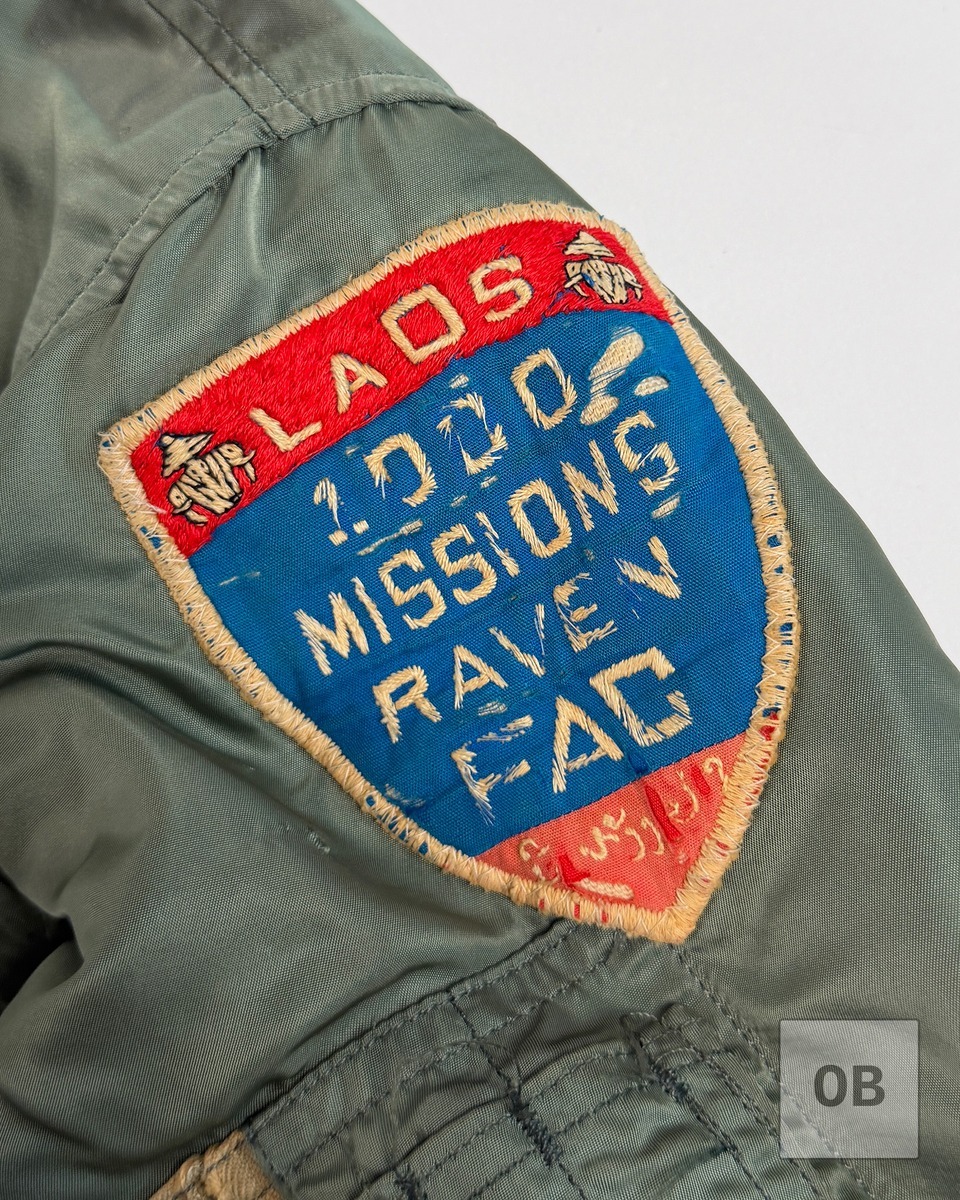
The Ravens were not a conventional Air Force squadron, and their unusual circumstances produced a distinctive material culture of their own, including locally made insignia such as the Raven patch sewn to Hix's jacket.
One of those men was James "Butch" Hix.
And one of the objects that survives from his time in Laos is this jacket.
The Jacket
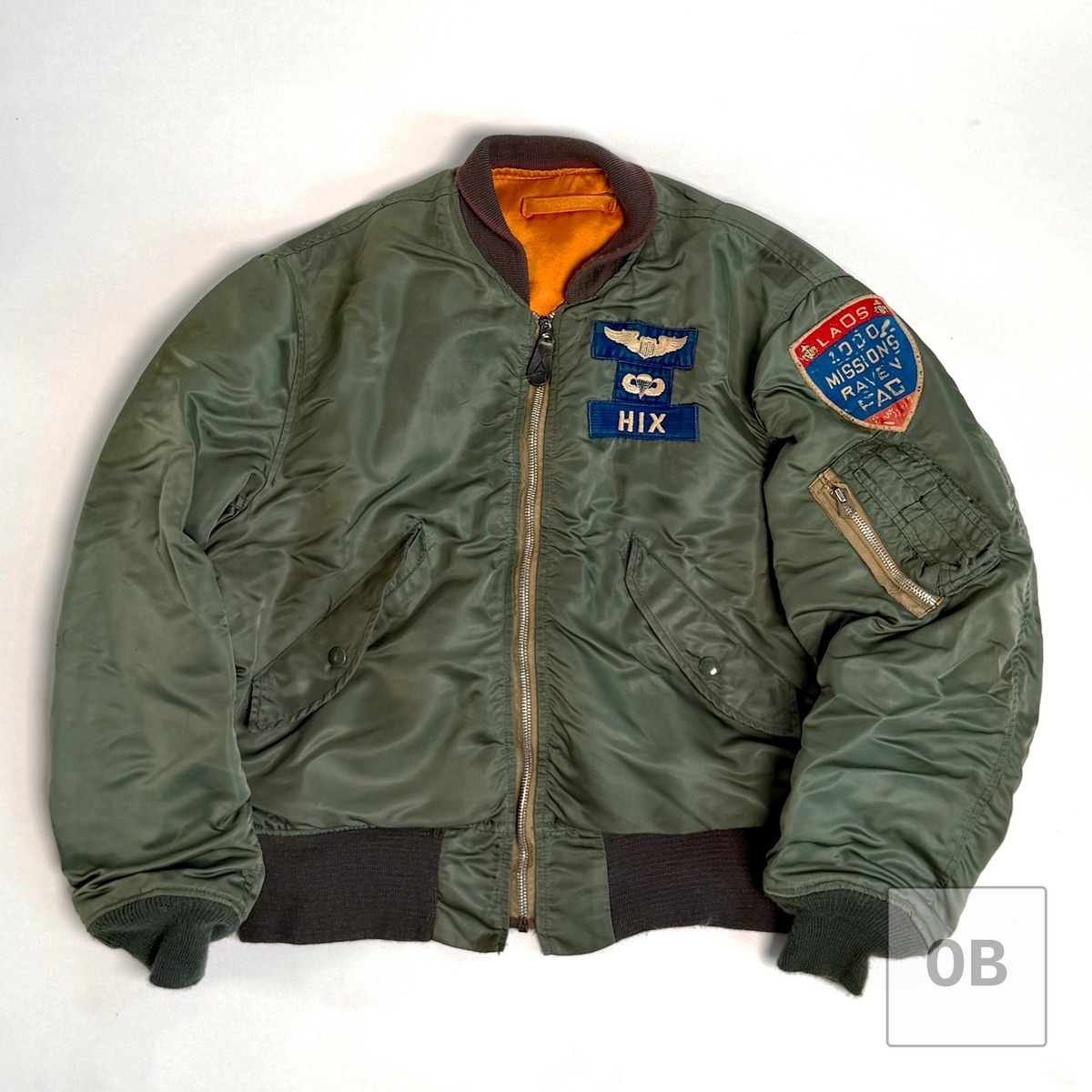
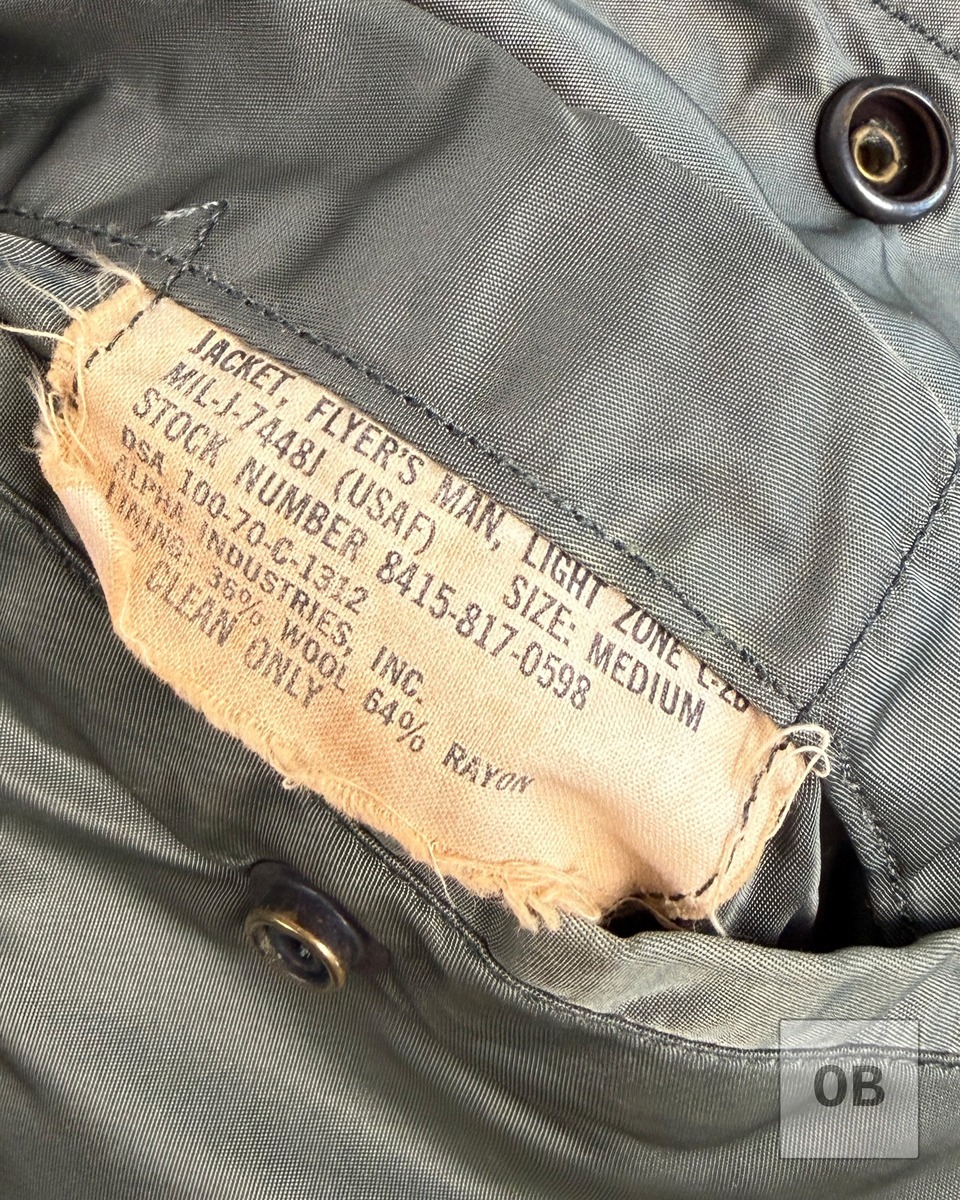
It is a U.S. Air Force L-2B flying jacket, size Medium, made from sage nylon with knit collar, cuffs, and waistband and the characteristic orange interior lining. The contractor's label identifies it as a "JACKET, FLYER'S MAN, LIGHT ZONE, L-2B," specification MIL-J-7448J, manufactured by Alpha Industries under Defense Supply Agency contract DSA 100-70-C-1312.
The contract dates the jacket to 1970.
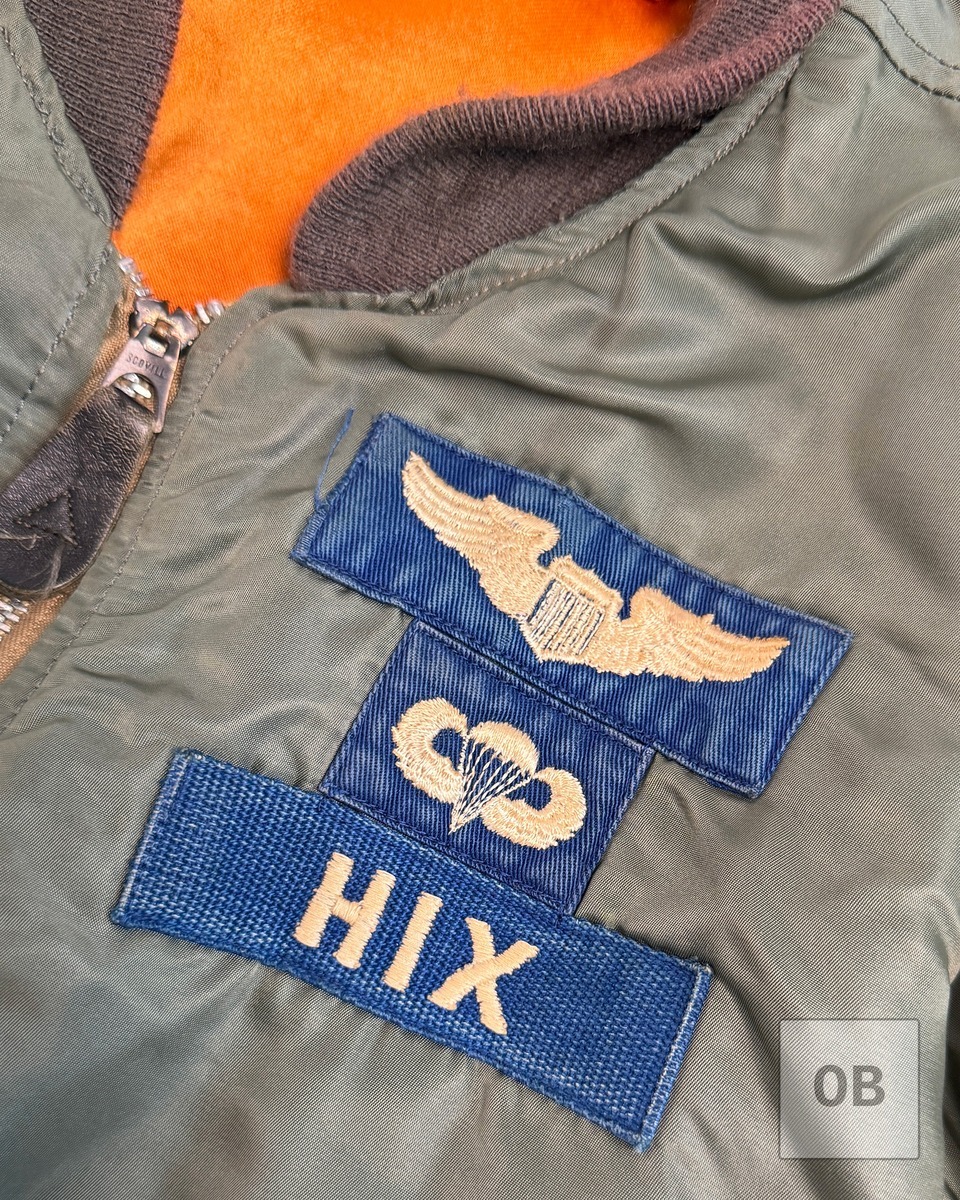
On the left chest is a vertical stack of three identifiers: U.S. Air Force pilot wings, a parachutist badge, and a simple name tape:
HIX.
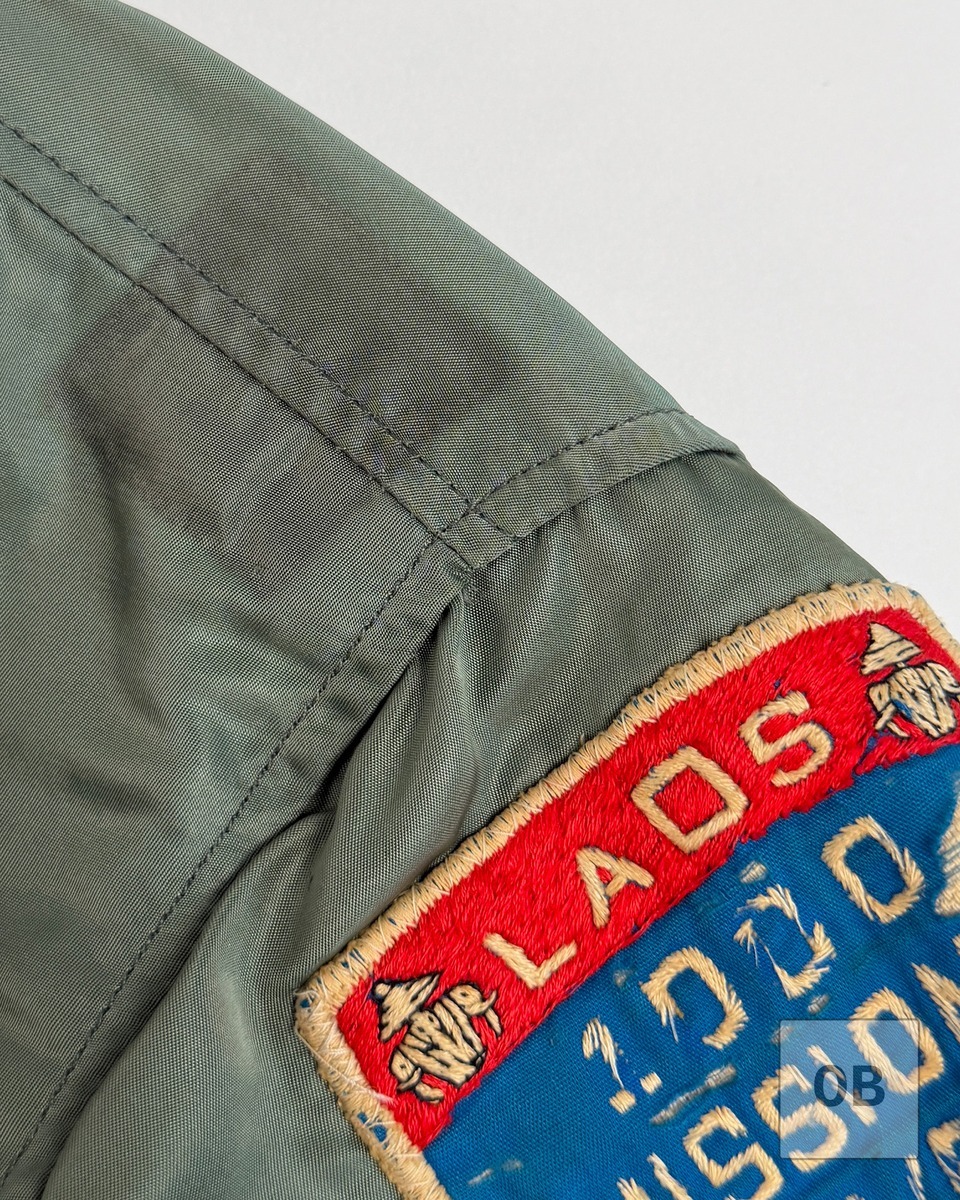
On the sleeve is something considerably less conventional: a large hand-embroidered, theater-made Raven FAC patch. The shield reads LAOS / 1,000 MISSIONS / RAVEN / FAC. Its embroidery is heavily worn, and a line of smaller characters across the lower red field has been abraded nearly beyond recognition.
There is also evidence of something that is no longer there.
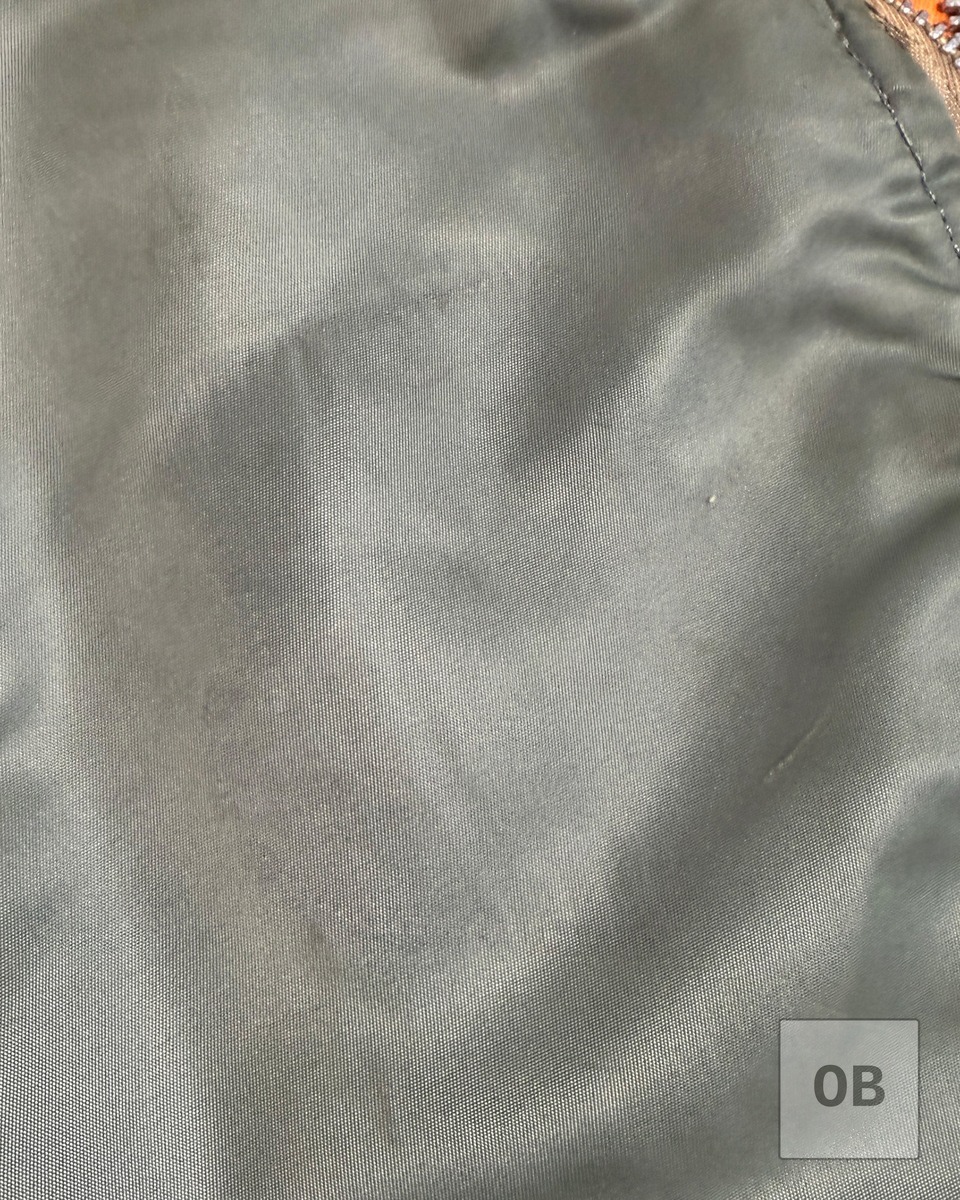
On the right breast, the sage nylon has faded with age, leaving a distinctly darker shield-shaped area where an Air Force organizational patch once covered the fabric beneath it. Its outline resembles the shield-and-scroll form common to Air Force unit and command insignia of the period, although there is not enough evidence to identify the missing patch. Hix's officer rank insignia was also removed from the shoulders.
Taken together, these alterations are entirely consistent with Hix's transition into the covert Raven program.
The jacket cannot tell us precisely when the insignia were removed, but the physical evidence closely corresponds with what is known about his Raven service.
The name tape, however, leads somewhere very specific.
Jim "Butch" Hix
James Henry Hix Jr. was born in 1944 and raised in Pensacola, Florida. He graduated from the U.S. Air Force Academy in 1968 and became a Forward Air Controller. Hix first flew O-1 Bird Dogs with the Red Markers before volunteering for the Ravens, arriving in Laos already experienced in the low, slow flying the job demanded.
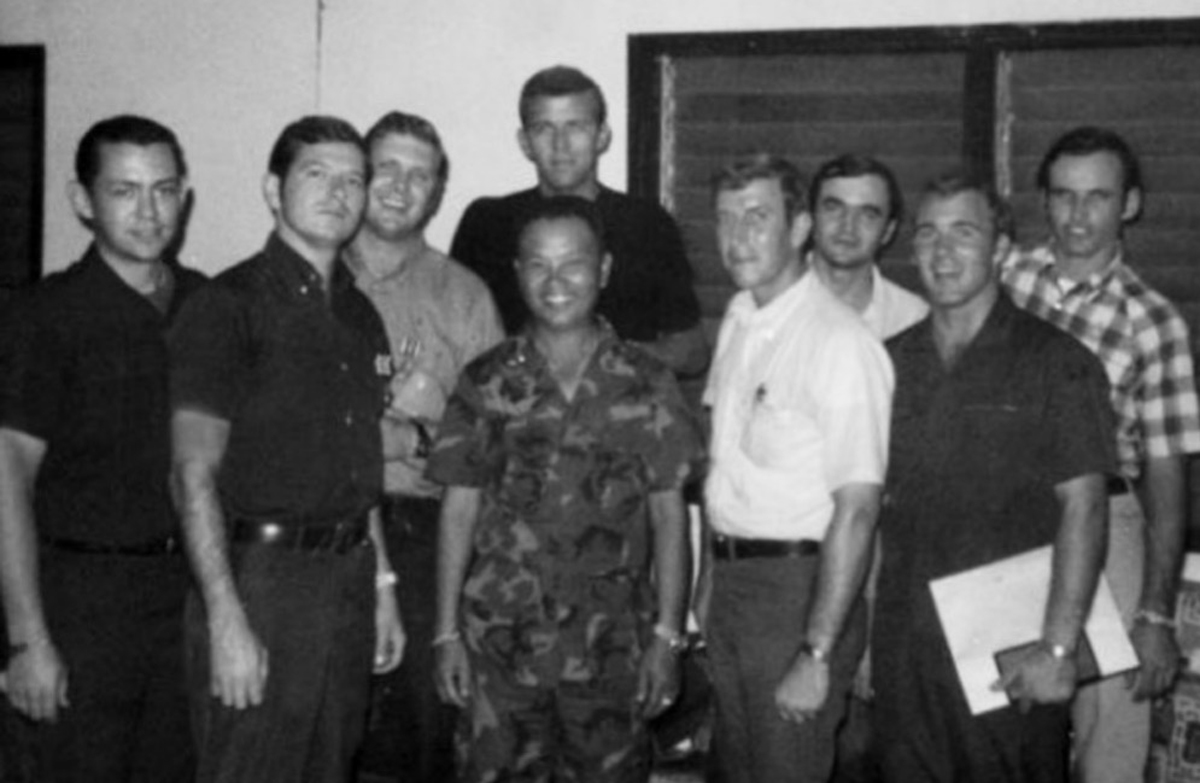
By 1970 Hix was at Long Tieng, the secret mountain base that served as headquarters for Gen. Vang Pao and his Hmong forces. A surviving photograph places him there alongside Vang Pao and several fellow Ravens, including his Air Force Academy classmate and close friend Grant Uhls.
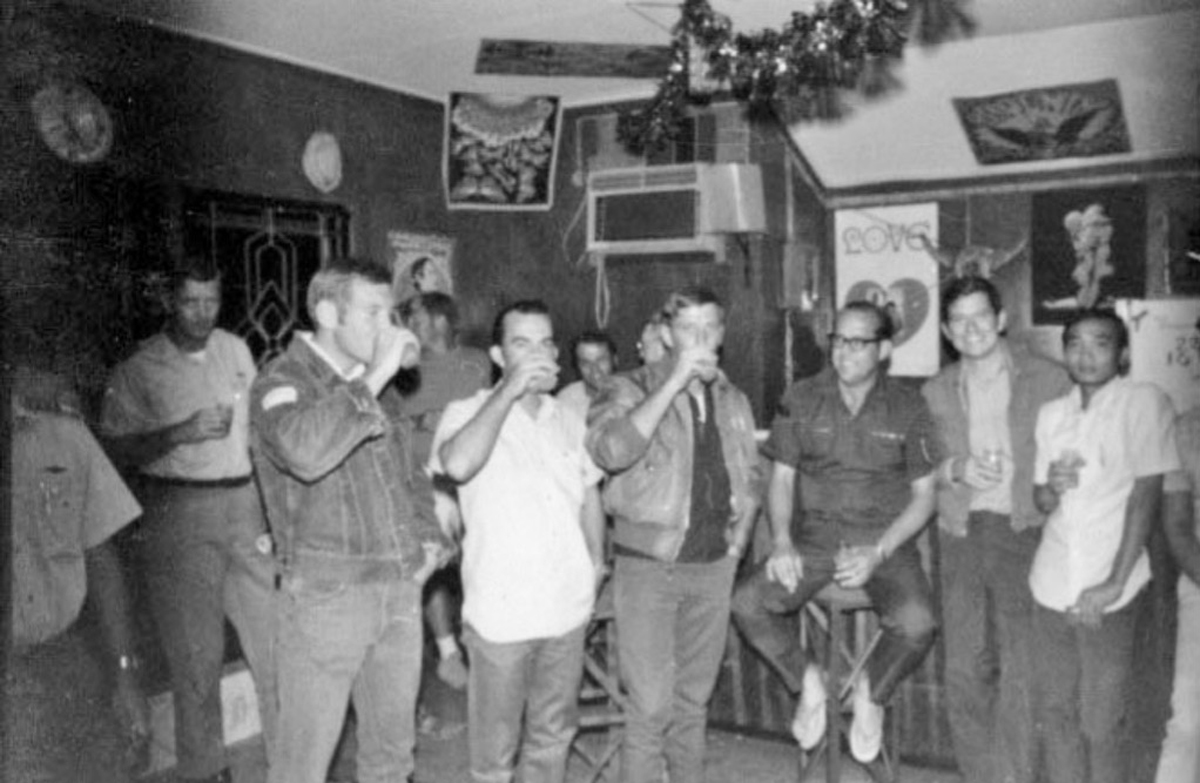
A period photograph taken in the CIA bar above the Bear Cage also shows Hix wearing an Air Force flight jacket during his Raven service. Although the photograph lacks sufficient detail to establish that it is this particular jacket, its appearance is notably consistent with the surviving L-2B.
On February 9, 1971, Hix was directing air attacks near Ban Na when antiaircraft fire struck the T-28 he was flying. With the aircraft damaged, oil obscuring the windshield and smoke filling the cockpit, Hix bailed out.
He had left his visor raised, and fragments from the departing canopy cut his face during the extraction, according to Christopher Robbins's 1987 history The Ravens: The Men Who Flew in America's Secret War in Laos. He came down wounded in enemy-held territory and was eventually recovered under fire by an Air America helicopter. Fellow Raven John Fuller later identified Hix's lost aircraft as T-28 #600.
Not long afterward, Hix watched Uhls go down and die. Robbins describes Hix responding by directing artillery onto the enemy position responsible, an episode that reveals some of the personal cost hidden behind the Raven program's secrecy.
Hix nevertheless extended for another tour.
He subsequently flew in southern Laos around Pakse and the Bolovens Plateau. There were more close calls, including O-1 engine failures that ended with Hix dead-sticking Bird Dogs into rice paddies. By his later missions, Robbins records Hix carrying a pistol, grenades, smoke grenades, three carefully checked survival radios—and a small Buddha figure he had bought for luck.
Hix survived Laos with a remarkable combat record. His Air Force Academy memorial credits him with a Purple Heart and Distinguished Flying Cross with three oak-leaf clusters.
After Laos, Hix became an Air Force flight instructor and entered U-2 pilot training. He eventually left the service but spent the rest of his professional life flying, ultimately serving eighteen years with United Airlines as a Boeing 757 and 767 pilot. He died in Pensacola in 2014, and more than fifteen former Ravens reportedly attended his interment at Barrancas National Cemetery.
The Jacket After Hix
Somewhere between Hix's war and the present, the jacket left his hands. How and when remain unknown.
Eventually it entered the vintage-clothing trade. By the time I encountered it, the jacket was in the hands of a dealer and slated for the Japanese vintage market, where original American military clothing has long been avidly collected to be worn.
What caught my attention wasn't simply that it was an original Vietnam-era L-2B. It was the HIX name tape and the large, hand-embroidered Raven patch on the sleeve. Those details suggested that this wasn't simply an interesting period flight jacket; there was a specific story still attached to it.
I acquired it before it left the United States and began researching the name.
That trail led to James "Butch" Hix, the Ravens, and Long Tieng, and a war fought without official acknowledgment.