 Object Biography
NVA Jungle Boots — 324B Division, Quang Tri 1966
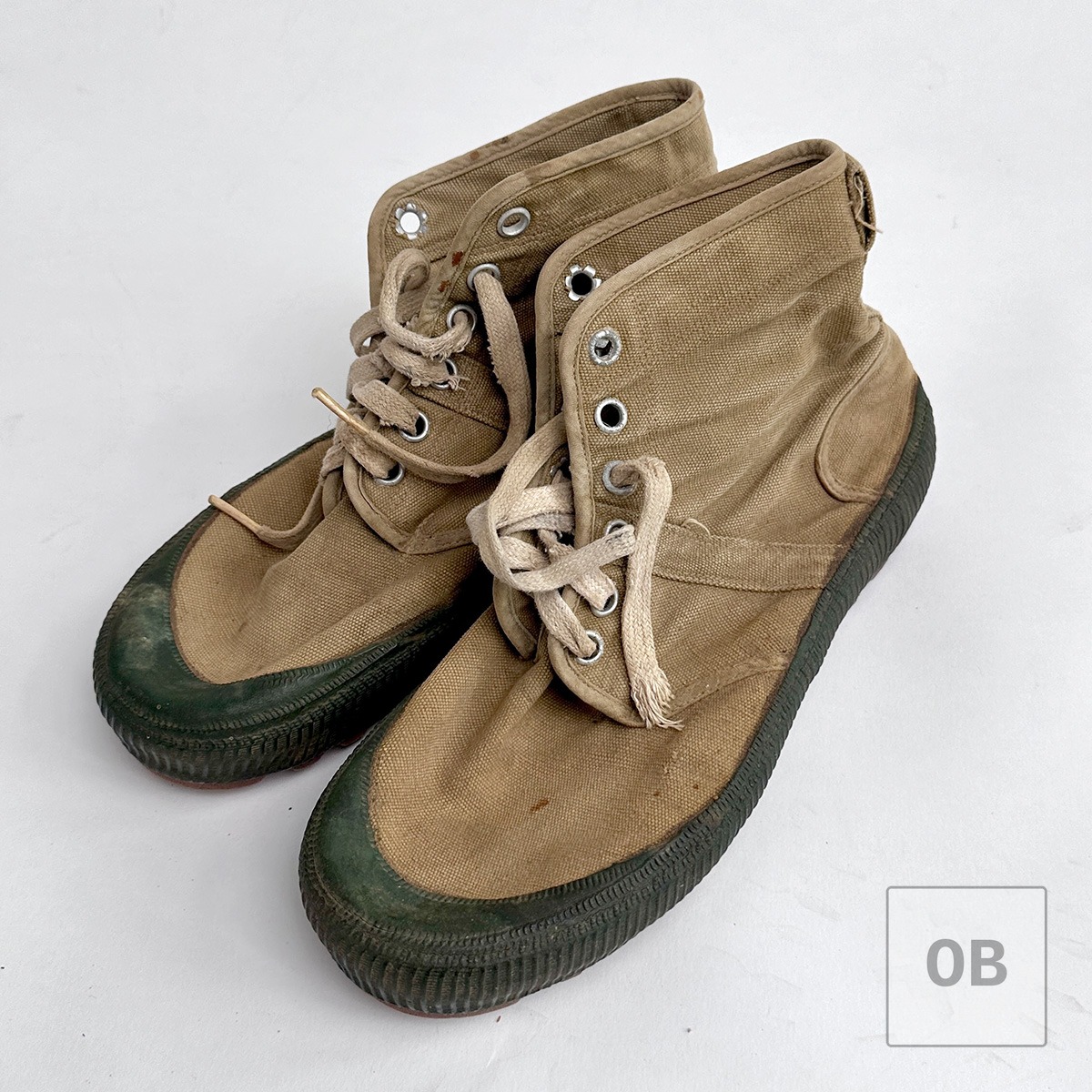
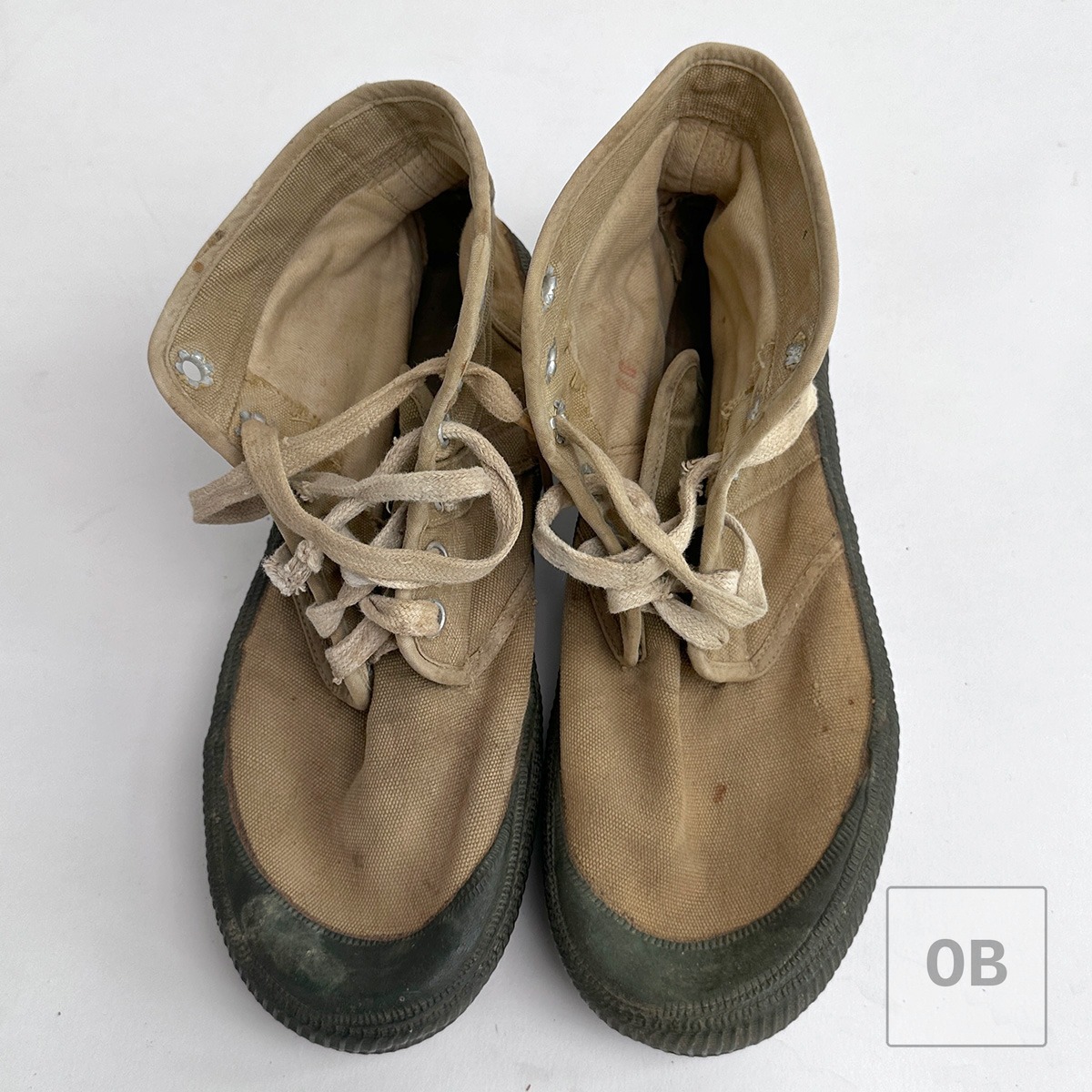
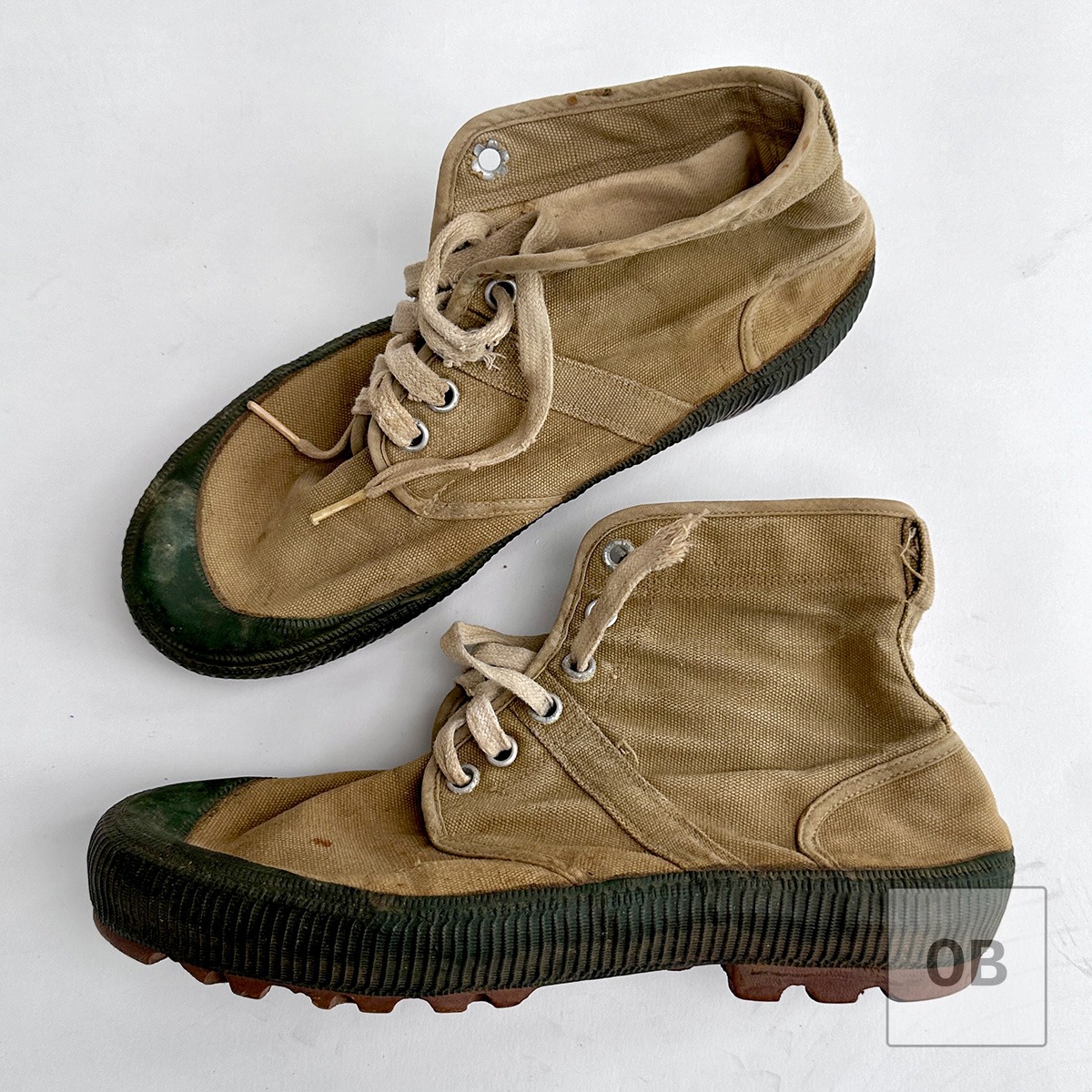
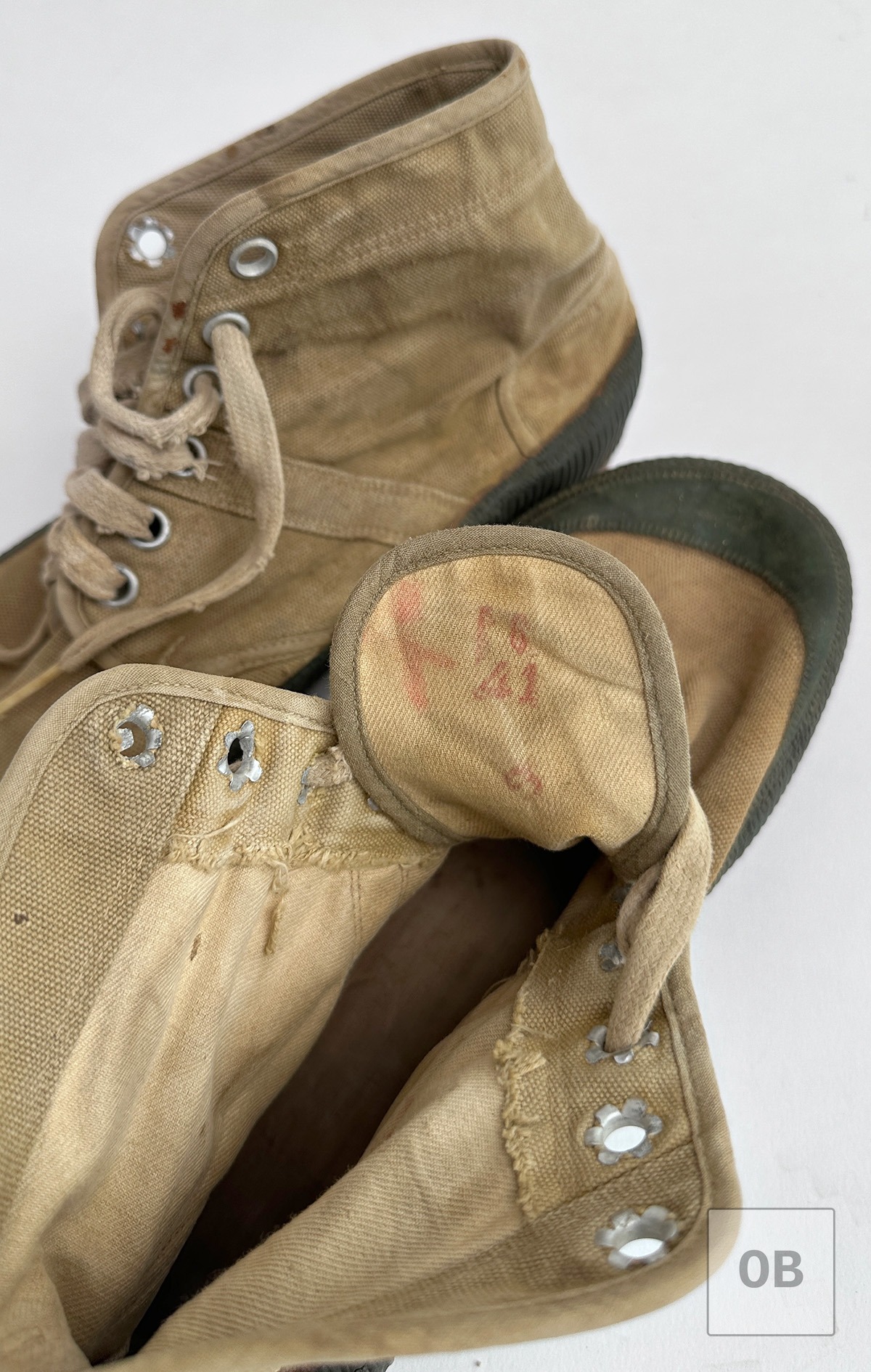
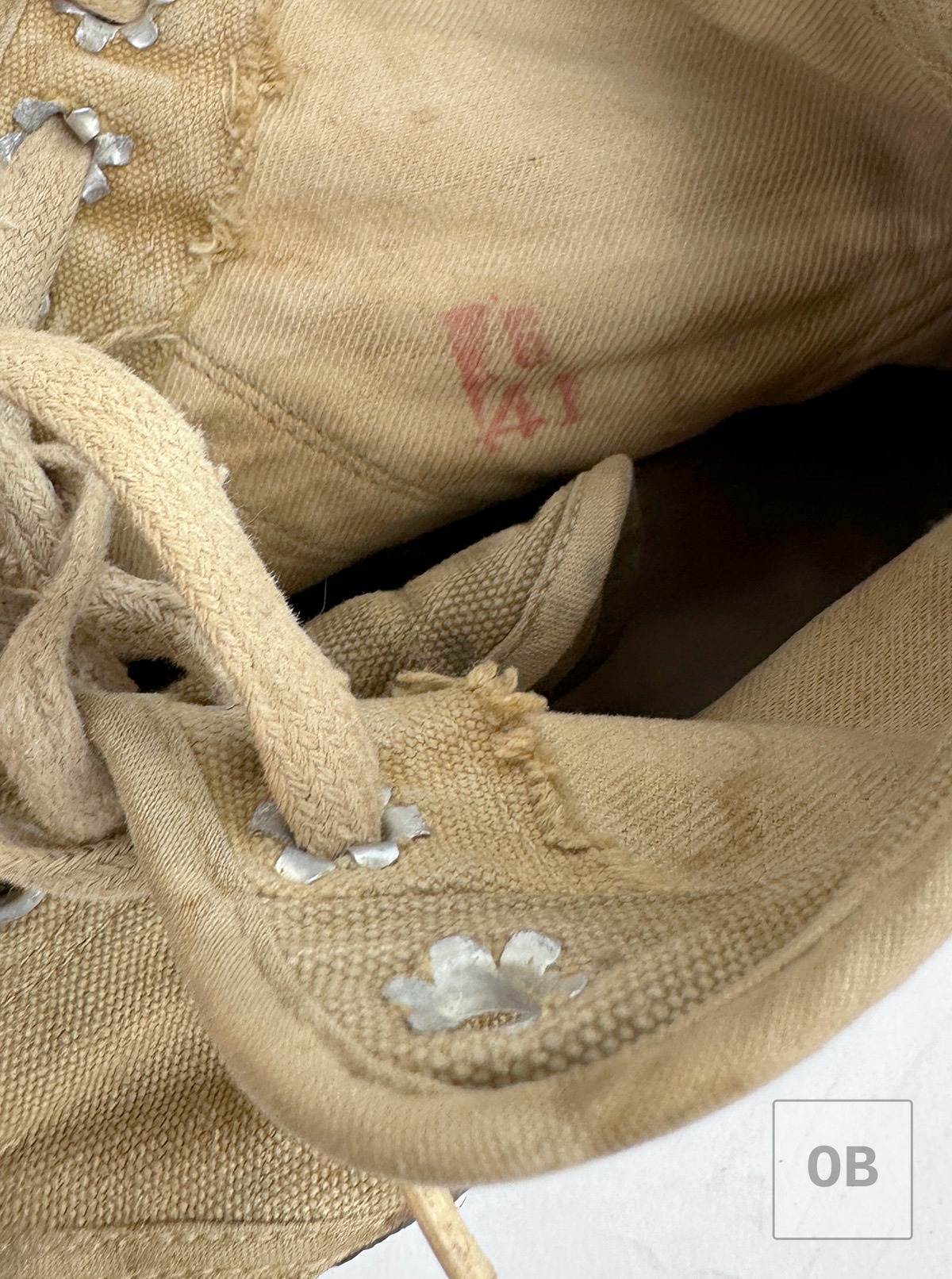
The boots still carry bloodstains.
Small reddish-brown droplets remain scattered across the khaki canvas. Nearly sixty years after a North Vietnamese soldier was shot on a ridge above the Song Ngan Valley, they remain where they dried. In 2006, I bought the boots from the Marine who brought them home.
Most bring-back militaria arrives with no story attached. This pair came with one, told by the seller himself across a string of emails, along with the paperwork to support it: his Combat History–Expeditions–Awards Record and the Western Union telegram his parents received when he was wounded.
He served with the 1st Battalion, 3rd Marine Regiment, 3rd Marine Division. His record shows he arrived in Vietnam in July 1966 and was almost immediately committed to Operation Hastings, a joint Marine–ARVN offensive into the Demilitarized Zone intended to block the North Vietnamese 324B Division from massing in Quang Tri Province. It was there, on the high ground above the Song Ngan Valley that Marines nicknamed Mutter's Ridge, that he acquired the boots. As he described it to me:
"We overran a nva (826rd reg.) base camp on mudders ridge. We took some pows, wounded some, killed some and the rest fled. I got the shoes off of a wounded gook [sic] that was shot in the thigh. We got lots of stuff (rice, papers, maps, weapons, and all kinds of supplies). Most of the captured stuff was sent to intellagence. I had just been in country about a month so I didn't know to hide what I found. That is the reason I just end up with shoes and a belt."
The "826th" regiment he remembered does not match the documented order of battle. The 324B Division fielded the 90th, 803rd, and 812th Regiments during Operation Hastings, and no 826th appears in the historical record. It is a small discrepancy between a soldier's memory, recalled four decades later, and the official record. The ridge, the operation, and the division all align.
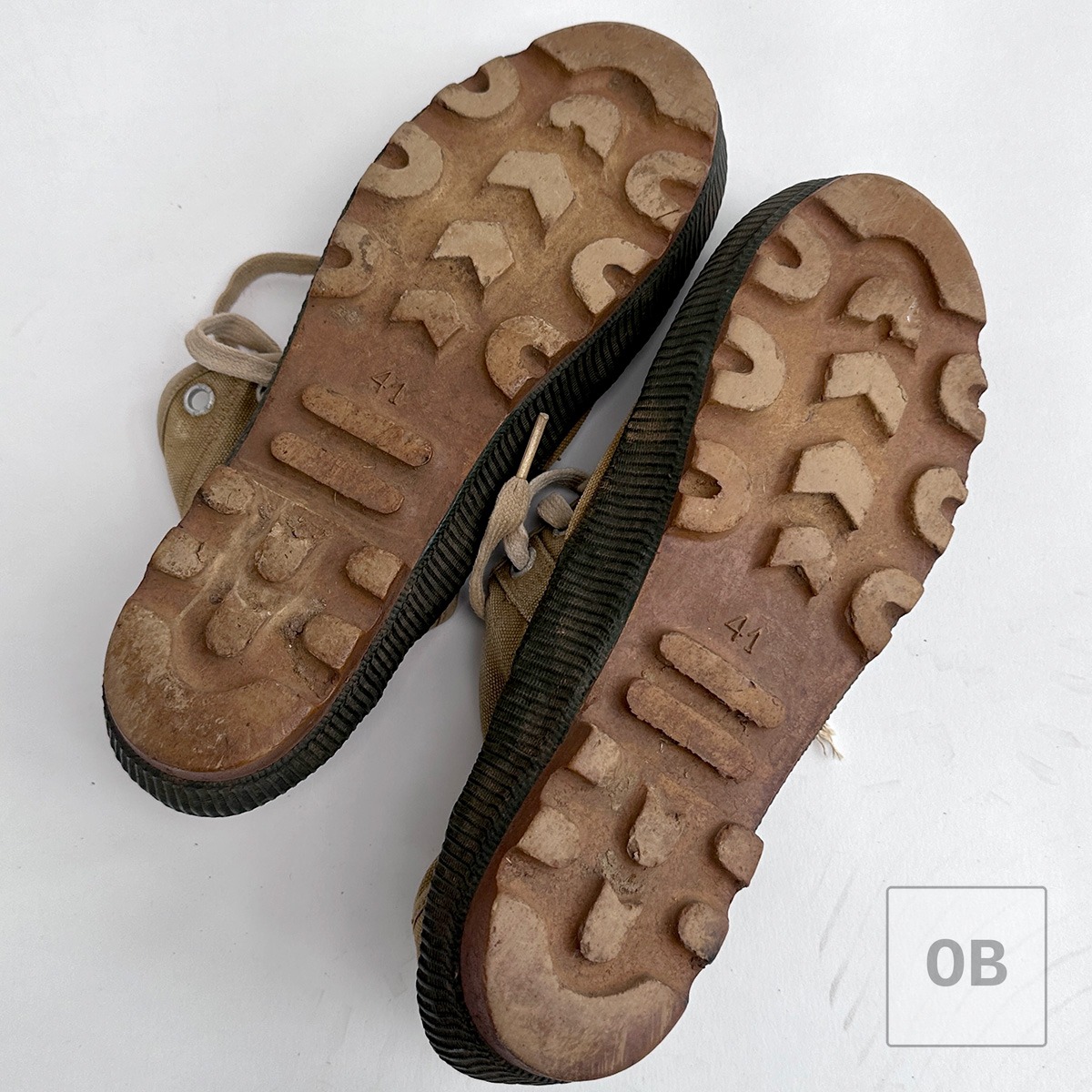
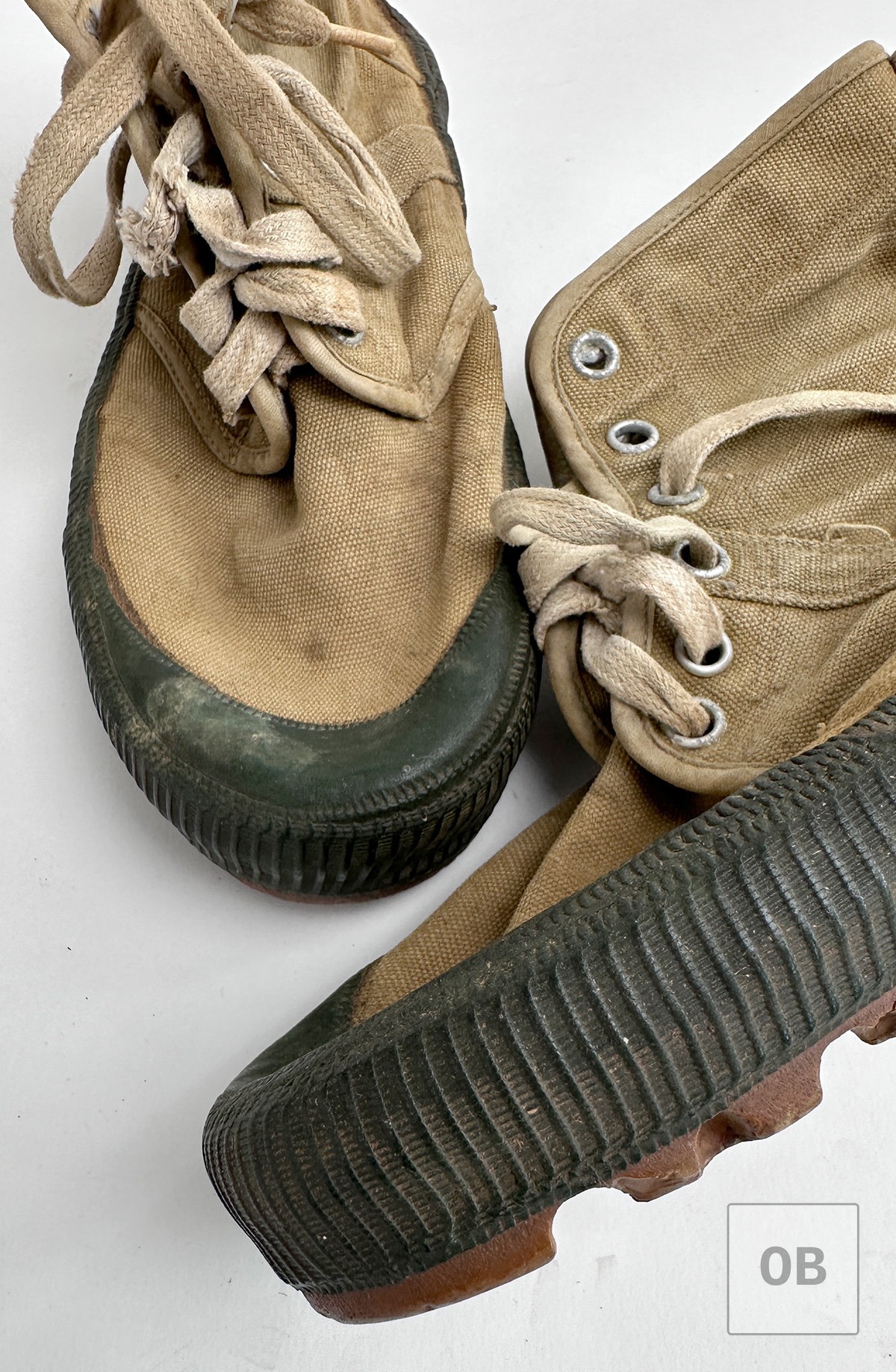
The boots preserve the most tangible part of the story. The bloodstains are still visible on the canvas, apparently from the thigh wound he described. There is still soil packed into the treads. Unlike the documents and emails, these details belong to the boots themselves.
Yet the provenance is incomplete. We have a name, a unit, a combat record, and a wound telegram for the Marine who brought the boots home. We have nothing for the man who was wearing them: not his name, not his fate, not whether he survived being shot in the thigh on a ridge in Quang Tri Province. The provenance trail runs entirely in one direction.
The Marine had been in-country only about four weeks when the fighting on Mutter's Ridge occurred, which may explain why the boots survived as a personal souvenir rather than being swept up with the maps, documents, and weapons sent to intelligence. He was still new enough that he had not yet learned which captured items disappeared before they could be officially collected.
His Combat History–Expeditions–Awards Record shows that Hastings was only the beginning. Over the following year, he fought in a succession of major operations across northern I Corps before being wounded during Operation Buffalo.
In our correspondence, he told me he had been wounded while serving as a machine gunner during Operation Buffalo. He later sent copies of his service record and the Western Union telegram his parents received after he was wounded.
On 7 July 1967, during combat operations near Quang Tri, he was struck by a hostile mortar round and suffered a blast concussion accompanied by partial hearing loss. A Western Union telegram sent to his mother two days later confirms the event almost line for line with his service record:
"sustained a loss of hearing from a hostile mortar while engaged in action against hostile forces..."
The telegram notes that he was hospitalized for approximately one week before returning to duty. His awards record lists a Purple Heart approved that same month by the Commanding General of the 9th Marine Amphibious Brigade.
He was candid that not everything he brought home survived the trip. In addition to the boots, he had acquired a Walther P-38 pistol and an NVA officer's belt buckle. Both were confiscated during the unit's rotation through Okinawa.
"We weren't supposed to keep any semi automatic weapons," he explained.
The pistol disappeared into the system.
The boots survived.
The boots survived because a twenty-year-old Marine, only weeks into his first combat operation, carried them home instead of surrendering them with the maps, weapons, and documents collected for intelligence. The paperwork tells us who he was, where he served, and how he was wounded. The bloodstains remind us the boots belonged to someone else first.
The provenance trail runs in one direction: from a factory in the People's Republic of China, through the North Vietnamese supply system, to an unnamed soldier on Mutter's Ridge, to a Marine machine gunner during Operation Hastings, to a shoebox for forty years, to an eBay listing in 2006, and finally to this collection. We can trace the boots to the battlefield. The identity of the man who wore them there remains unknown.